J. M. W. Turner: The Mystery of 'The Rising Squall'. Part 3
J.M.W Turner
An Oil for Margaret Martha Whiteman Douglas,
being one of
His First Four Oil Paintings
1792
|
J. M. W. Turner: The Mystery of 'The Rising Squall'. Part 3 |
|
|
J.M.W Turner
An Oil for Margaret Martha Whiteman Douglas, being one of His First Four Oil Paintings 1792
|
|
|
ABC
|
123 |
|
||
|
blank back of cover or 'compiled by' |
.
|
Contents | ||||
| Documents | ? | ||||
| Preface | ? | ||||
| ... | |||||
| 1. JMW Turner's First Oil | |||||
| Time, Place and Title | 1 | ||||
| Illustrations: A.J. Finberg: 'The Life of JMW Turner' Pages 21, 22& 23 | |||||
| Synopsis | |||||
| Timeline | |||||
| Copies of pages 21 to 23 | |||||
| Illustrations: Drawings and Paintings associated with A.J. Finberg's: 'The Life of JMW Turner' Pages 21, 22& 23 | |||||
| List of Drawings and Paintings | |||||
| Images of Drawings and Paintings | |||||
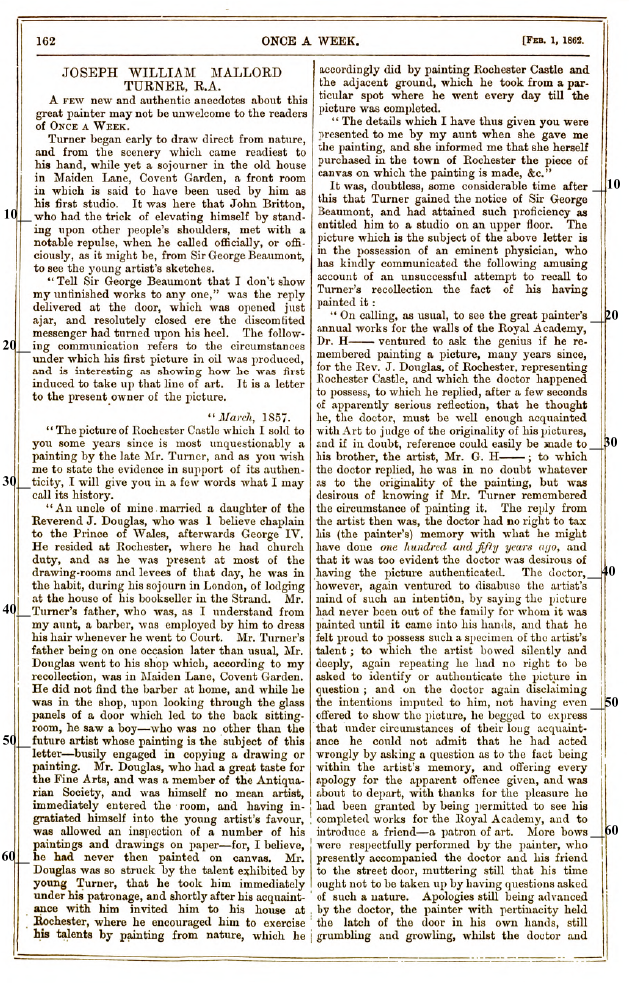
| Illustrations: 'Once A Week', 1862, Page 162; The Nephew's Letter. | |||||
| Synopsis | 13 | ||||
| The Nephew's Letter | |||||
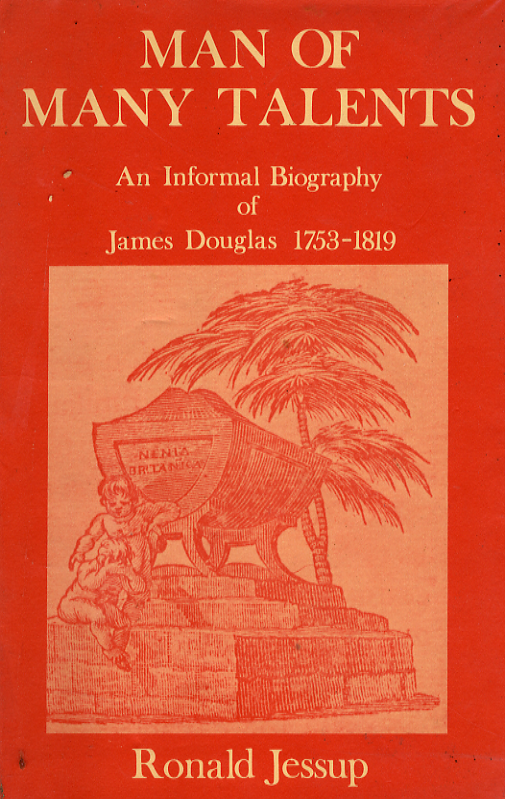
| Images of the Cover and Page 162 | |||||
| Details of the Provenance of the First Oil | |||||
| Illustration: 'Once A Week', 1862, Pages 163 to 166; The Anecdotes | |||||
| People Mentioned in the Anecdotes | |||||
| Images of Pages 163 to 166 | |||||
| Rev. James Douglas and his Family | |||||
| A Brief Background of Margaret Martha Whiteman Douglas | |||||
| Documents | |||||
| Details about Margaret Martha Whiteman Douglas Arising from the documents | |||||
| 2. JMW Turner's Second Oil | 16 | ||||
| An Overview of the painting of Turner's second oil on canvas | 16 | ||||
| Foots Cray, Rev. Robert Nixon | 16 | ||||
| 3. JMW Turner's Third Oil - 'Self Portrait Age 16' | x | ||||
| 4. JMW Turner's Fourth Oil - 'The rising squall, hot wells, from St. Vincent's rock, Bristol' | x | ||||
| x | x | ||||
| x | x | ||||
| 5. | x | ||||
| ... | |||||
|
i | ||||
.
|
Contents (cont) | ||||
| 13 | |||||
| Rev. James Douglas and his Family | |||||
| A Brief Background of Margaret Martha Whiteman Douglas | |||||
| Documents | |||||
| Details about Margaret Martha Whiteman Douglas Arising from the documents | |||||
| 2. JMW Turner's Second Oil | 16 | ||||
| An Overview of the painting of Turner's second oil on canvas | 16 | ||||
| Foots Cray, Rev. Robert Nixon | 16 | ||||
| 3. JMW Turner's Third Oil - 'Self Portrait Age 16' | x | ||||
| 4. JMW Turner's Fourth Oil - 'The rising squall, hot wells, from St. Vincent's rock, Bristol' | x | ||||
| x | x | ||||
| x | x | ||||
| 5. | x | ||||
| 6. Loose Ends! | |||||
| Bell Sunset | x | ||||
| Dutch Boats in a Gale of Wind off the Needles | x | ||||
| Portrait of Thomas Naylor | x | ||||
| Moonlight | x | ||||
| 7.x | x | ||||
| x | x | ||||
| x | x | ||||
| x | x | ||||
| 8. x x | x | ||||
| ... | |||||
| Index | |||||
|
ii | ||||
.
|
Documents | |
|
page 1 of docs |
||
| X |
@@@@@
|
Documents | |
|
page 2 of docs |
||
| X |
@@@@@
|
||
|
page 3 of docs |
||
| X |
@@@@@
|
Preface | |
|
The purpose of this book is to discuss the context of JMW Turner's painting of 'The rising squall, hot wells, from St. Vincent's rock, Bristol' as one of his first four oils. In this book 'The Rising Squall' is presumed to be Turner's fourth oil painted. However, the exact order of this and his 'Self Portrait Age 16' cannot be firmly established; the self portrait has been treated as the third. Starting with the very first oil, painted, during a tour of north Kent, at Rochester in September 1792 with canvas purchased there and oil paints given to him by Rev. James Douglas the factual details of each of the four are examined. The subtitle of this volume includes the statement 'An oil for Margaret Martha Whiteman Douglas'. This refers to the first oil, 'Rochester Castle and the Adjacent Ground'. The first oil was first recorded at auction, in 1860, as 'Rochester Castle an early work, painted for the Rev. [T] Douglas, one of the early patrons of the great master'. However, the records for this painting show that it was in the possession of Margaret Martha Whiteman Douglas, the daughter of Rev. James Douglas, from the time that she was present at the purchase of the canvas on which it was painted in 1792. She later married Mortimer Tucker but having no children of her own, gave the painting to her nephew who sold it to Dr. William Hering the seller in the 1860 sale. It appears that, whilst Turner painted in oil on canvas at the behest of Rev. James Douglas, the painting was given to Margaret Martha his ten year old daughter. Moving on to Foots Cray, during the same tour, Turner painted an oil on canvas for his patron Rev. Robert Nixon. Turner had paints and canvas from Rochester. There is no mention of stretchers or strainers in the documents examined. Whilst it is possible that these oils were painted flat like watercolours it seems unlikely, in the company of two semi-professional artists, that he would have done so. The second oil was 'The Country Waggon, Snowdon - Early Morning'; 25" x 30"; signed 'W. Turner' and was well documented before it was lost in 1920. Turner was 17 years old when this tour took place and he returned to London in late September or early October. It is at this point that the evidence becomes 'circumstantial' in respect of the oil paints, canvas and stretchers or strainers. Within a very short period of time following his return to London Turner painted two additional oil paintings. These were the painting now known as 'Self Portrait Age 16' and 'The rising squall, hot wells, from St. Vincent's rock, Bristol'. The latter was exhibited at the RA exhibition of 1793 and afterwards was given or sold to Rev. Robert Nixon. The question arises as to where materials for these two paintings originated and the answer is likely to be that they were the remains of the materials aquired at Rochester. There remains the mystery of the report of the Edward Bell 'Sunset' in Thornbury. A substantial amount of evidence attributable to Bell is available in the Anderdon Papers at the Royal Academy. There is a little evidence suggesting that Bell took notice of Turner's work in the 1793 exhibition but there is no evidence pertaining to 'Sunset'. Evidence for the existance and timing of Turner's first four oils is compelling and provides a consistent narrative up to the exhibition of 'The rising squall, hot wells, from St. Vincent's rock, Bristol' in 1793. |
||
| X |
@@@@@
|
||
|
page 2 of preface |
||
| X |
@@@@@
|
||
|
||
|
blank page before page 1 |
.
|
J. M. W. TURNER: THE MYSTERY OF 'THE RISING SQUALL'. PART 3 - HIS FIRST
FOUR OIL PAINTINGS
1. JMW Turner's First Oil - 'Rochester Castle and the Adjacent Ground' |
|
|
1.1 Time, Place and Subject College Yard, Rochester 1792 The time was September 1792. The house Turner visited when he painted his first oil was in College Yard, Rochester. The painting was a scene of Rochester Castle. Evidence Evidence of the time, September 1792, is found in A. J. Finberg's, 'The Life of JMW Turner'. Evidence of the place, College Yard, Rochester, is found in two publications. (i) In a letter (the 'nephew's letter') written in 1857 and published in 'Once A Week' magazine which also provides the title for this picture and (ii) in Ronald Jessop's 'Man of Many Talents, An Informal Biography of James Douglas' which identifies Douglas' location as a house in College Yard. The evidence in these three sources is illustrated and examined in the following pages.
|
|
|
.
|
J. M. W. TURNER: THE MYSTERY OF 'THE RISING SQUALL'. PART 3 - HIS FIRST
FOUR OIL PAINTINGS
JMW Turner's First Oil - 'Rochester Castle and the Adjacent Ground' |
1.1 |
|
Illustrations: A.J. Finberg: 'The Life of JMW Turner' Pages 21, 22& 23
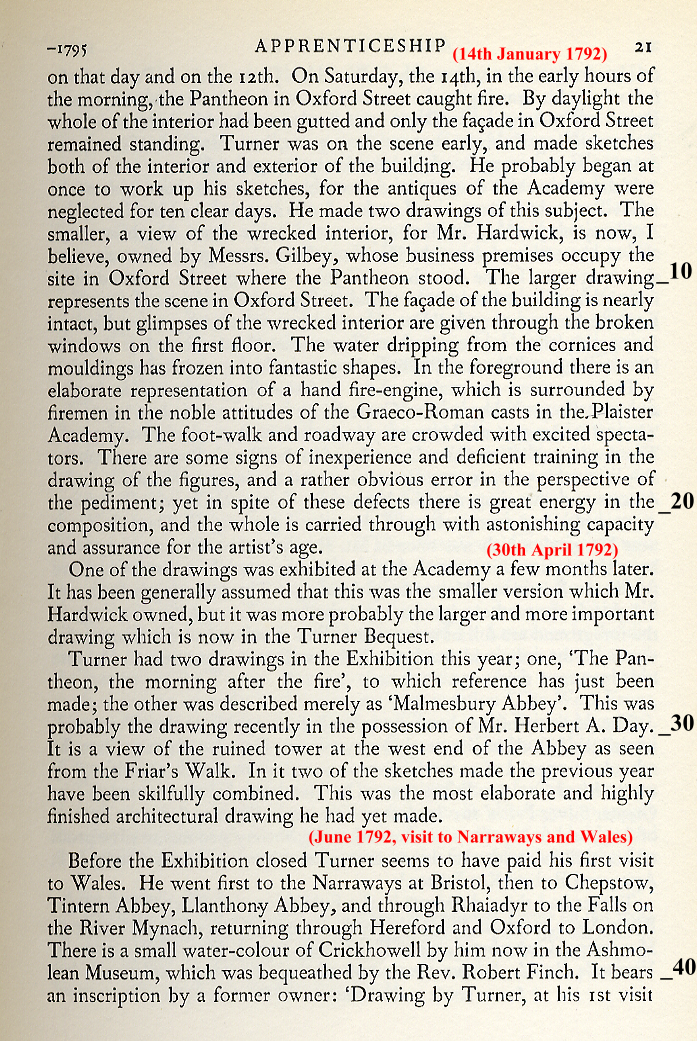
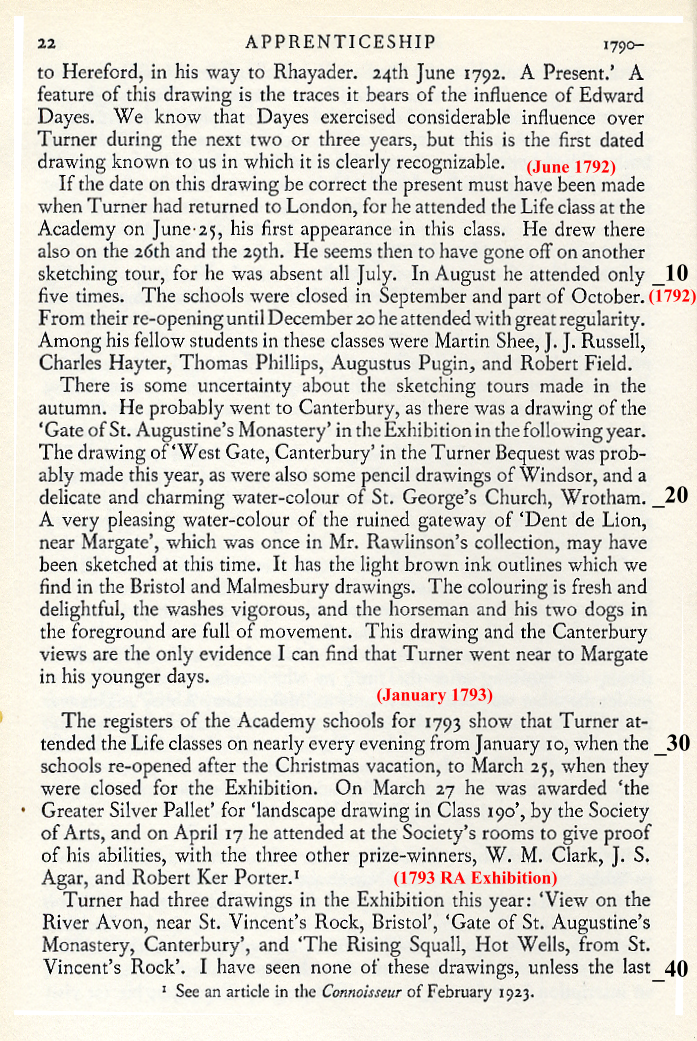
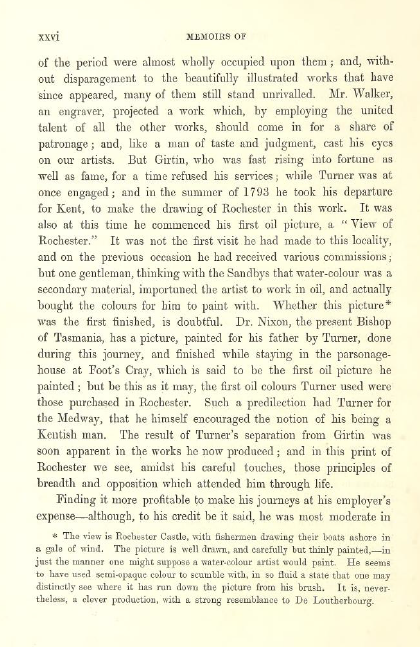
Synopsis Lines 1 to 34 on page 21 trace Turner's movements from January 14th 1792 to the Royal Academy Exhibition of 1792. (30th April to 9th June 1792). On line 35 Finberg wrote, "Before the exhibition closed Turner seems to have paid his first visit to Wales. He went first to the Narraways at Bristol..." On page 22 line 8 Finberg places Turner back in London on 25th of June. Finberg then identifies a sketching tour in July, lines 9 & 10 but places Turner back in London, for five attendances at the Academy, during August. On line 11, Finberg notes that the schools were closed during September and part of October which he appears to refer to as the 'autumn' in lines 15 and 16. Thereafter Turner attended with 'great regularity' (line 12) until 20th of December. Finberg shows that Turner attended classes every evening from 10th January to 25th March 1793. The 1793 Exhibition was open from 29th April to 8th June 1793. In the 1793 exhibition Turner exhibited an oil (see 'J.M.W. Turner: The Mystery of the Rising Squall - Part 1'). His first oil, 'Rochester Castle and the Adjacent Ground' must therefore have been painted before the 1793 Royal Academy Exhibition which places his painting of his first (and second) oil during the Kent Tour of September and the early part of October 1792. |
|
|
2 |
.
|
J. M. W. TURNER: THE MYSTERY OF 'THE RISING SQUALL'. PART 3 - HIS FIRST
FOUR OIL PAINTINGS
JMW Turner's First Oil - 'Rochester Castle and the Adjacent Ground' |
1.1 |
|
Timeline From Finberg's Page 21 line 1 to page 23 line 2 a timeline of Turner's activities between 14th January 1792 and 29th April 1793 can be established.
At the beginning of this timeline it is evident that Turner made his drawings of the Pantheon. At the end of the timeline Turner exhibited three works in the 1793 Royal Academy Exhibition. As is shown in 'The Mystery of the Rising Squall - Part 1' one of these works was Turner's first exhibited oil painting 'The Rising Squall, Hot Wells, from St. Vincent's Rock, Bristol'. Turner's first oil must therefore have been painted before that date. It will be seen that the subject of Turner's first oil was, 'Rochester Castle and the Adjacent Ground'. It will also become evident that his second oil painting was painted at Foots Cray in Kent. Both of these paintings are recorded as having been painted whilst on tour. Since Foots Cray is closer to London than Rochester the first and second oils must have been painted on the return part of the tour. This places the painting of the first oil during the return journey from Margate, via Caterbury, via Rochester (where the first oil was painted) then, via Foots Cray (where the second was painted) and home to London: the Kent tour of September 1792. |
|
|
3 |
.
|
J. M. W. TURNER: THE MYSTERY OF 'THE RISING SQUALL'. PART 3 - HIS FIRST
FOUR OIL PAINTINGS
JMW Turner's First Oil - 'Rochester Castle and the Adjacent Ground' |
1.1 |
|
1.i; A.J. Finberg: 'The Life of JMW Turner' page 21 | |
|
|
||
|
4 |
.
|
J. M. W. TURNER: THE MYSTERY OF 'THE RISING SQUALL'. PART 3 - HIS FIRST
FOUR OIL PAINTINGS
JMW Turner's First Oil - 'Rochester Castle and the Adjacent Ground' |
1.1 |
|
1.ii; A.J. Finberg: 'The Life of JMW Turner' page 22 | |
|
|
||
|
5 |
.
|
J. M. W. TURNER: THE MYSTERY OF 'THE RISING SQUALL'. PART 3 - HIS FIRST
FOUR OIL PAINTINGS
JMW Turner's First Oil - 'Rochester Castle and the Adjacent Ground' |
1.1 |
|
1.iii; A.J. Finberg: 'The Life of JMW Turner' page 23 | |
|
|
||
|
6 |
.
|
J. M. W. TURNER: THE MYSTERY OF 'THE RISING SQUALL'. PART 3 - HIS FIRST
FOUR OIL PAINTINGS
JMW Turner's First Oil - 'Rochester Castle and the Adjacent Ground' |
1.1 |
|
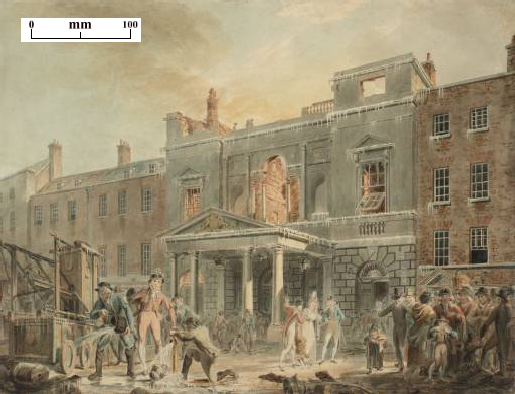
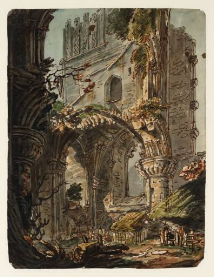
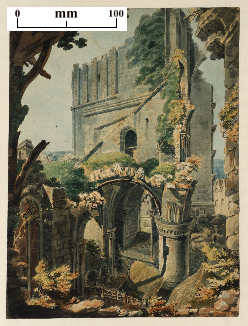
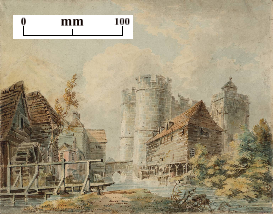
Illustrations: Drawings and Paintings associated with A.J. Finberg's: 'The Life of JMW Turner' Pages 21, 22& 23 List of Drawings and Paintings Drawings and paintings referred to in Finberg's text beween page 21, line 23 and page 23, line 2 are as follows: In this list we include notes showing whether or not each painting appeared in Sir Walter Armstrong's list of 1902.
Finberg's book was published in 1938. His reference to No. 15 above is often used to suggest that Finberg had identified the watercolour at Bristol, K816 (No. 14 above), acquired 1925, as 'The rising squall, hot wells, from St. Vincent's rock, Bristol'. What Finberg actually implied was that Bristol Museum's identification was wrong, "I have seen none of these drawings, unless ['The rising squall, hot wells, from St. Vincent's rock, Bristol'] was the view of 'Old Hot Wells House' ...". |
|
|
7 |
.
|
J. M. W. TURNER: THE MYSTERY OF 'THE RISING SQUALL'. PART 3 - HIS FIRST
FOUR OIL PAINTINGS
JMW Turner's First Oil - 'Rochester Castle and the Adjacent Ground' |
1.1 |
|
1.iv, 1 to 8 - Images of Drawings and Paintings associated with A.J. Finberg's: 'The Life of JMW Turner' Pages 21, 22& 23
|
|
|
8 |
.
|
J. M. W. TURNER: THE MYSTERY OF 'THE RISING SQUALL'. PART 3 - HIS FIRST
FOUR OIL PAINTINGS
JMW Turner's First Oil - 'Rochester Castle and the Adjacent Ground' |
1.1 |
|
1.v, 9 to 15 - Images of Drawings and Paintings associated with A.J. Finberg's: 'The Life of JMW Turner' Pages 21, 22& 23
|
|
|
9 |
.
|
J. M. W. TURNER: THE MYSTERY OF 'THE RISING SQUALL'. PART 3 - HIS FIRST
FOUR OIL PAINTINGS
JMW Turner's First Oil - 'Rochester Castle and the Adjacent Ground' |
1.1 |
|
Illustrations: J. Wykeham Archer. 'Anecdotes on the Life of JMW
Turner',
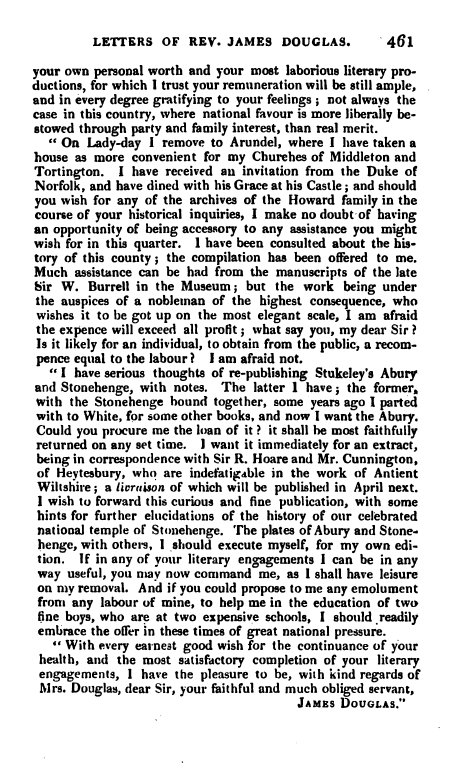
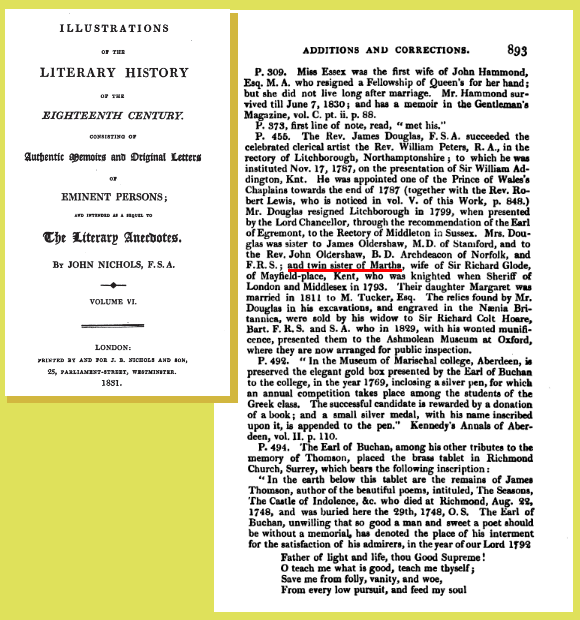
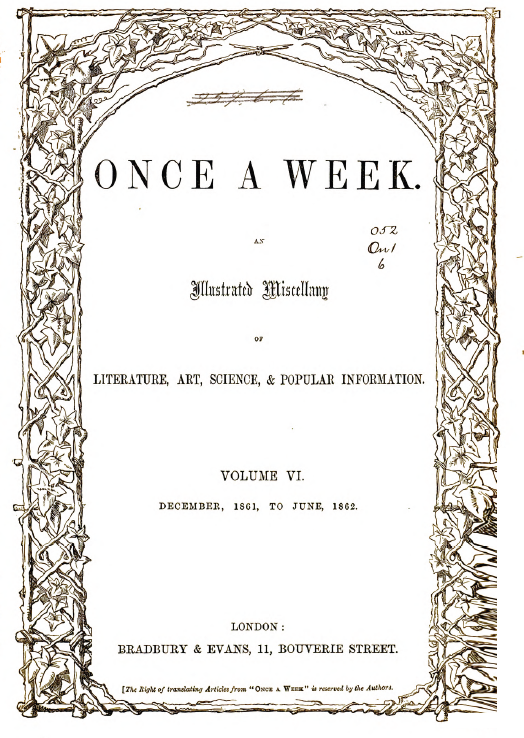
Synopsis The cover illustrated here indicates the source of the article referred to in these notes. The pages illustrated, cover and page 162 (and below, 163 to 166) may be different in other versions. The original Nephew's letter has not been located. A description of the picture on page 162 col 2 line 1, 'Rochester Castle and the Adjacent Ground' (and the fact that it remained with the Douglas Family) clearly distinguishes it from the second oil started during this tour and completed at Foots Cray. The order in which these works were painted indicates the direction in which Turner was travelling, Rochester to London, the return journey from Margate via Canterbury and after painting his 'St. Augustine's Gate' watercolours the smaller of which he probably gave to one of his patrons (Rev. Douglas or Rev. Nixon being two possibilities) and the larger he exhibited in 1793. (Earlier in 1792 he had visited the Narraway family in Bristol. There he similarly painted two views of the same scene leaving the smaller with the Narraways.) (see 1.2 below) The Nephew's Letter The nephew is not named and could be a niece. Rev. James Douglas is named and fully identified by many sources. His daughter, the aunt mentioned in the letter was Margaret Martha Whiteman Douglas. Her mother was Margaret, daughter to James Oldershaw (c1717-1782), surgeon of Leicester, from before 1780 residing in Rochester. Margaret's twin sister Martha Oldershaw married Richard Glode in 1793, later they become Sir Richard and Lady Glode and by 1817 Martha had assumed the title Dame Martha Glode. Whiteman, or more correctly 'Wightman' was the maiden name of James Oldershaw's wife, Elizabeth. Margaret Martha Whiteman Douglas married Mortimer Tucker (known also as Edward Mortimer Tucker) in 1811. The nephew (or niece) would be the child of Mortimer's brother or sister. Mortimer died in 1818. The nephew's letter itself speaks of a lifetime gift of JMW Turner's first oil painting by Margaret Martha Whiteman Tucker to her nephew:
|
|
|
10 |
.
|
J. M. W. TURNER: THE MYSTERY OF 'THE RISING SQUALL'. PART 3 - HIS FIRST
FOUR OIL PAINTINGS
JMW Turner's First Oil - 'Rochester Castle and the Adjacent Ground' |
1.1 |
|
Details of the Provenance of the First Oil On page 162, col 2, from line 10, the provenance of the picture emerges. There is no suggestion that the painting was given to Rev. James Douglas per se. Rather, it appears to have been in the possession of his daughter. It was then given to her nephew. The nephew is not identified and could have been a niece. The date of this gift is not specified. Also the context of the gift is absent; it may have been given along with other paintings or drawings by JMW Turner, in particular the small version of 'Gate of St. Augustine's Monastery, Canterbury' (now known as 'Old Gate Of Canterbury'; Yale/Mellon B1975.4.1764) painted during the 1792 tour which has an uncertain history before 1884. The sale of 'Rochester Castle and the Adjacent Ground' by the nephew is described in the letter (of 1857) as 'some years since'. The buyer can be identified from Wykeham Archer's essay as Dr. William Hering (1803-1876), brother of the artist George Edward Hering. Page 162, line 20 et. seq. describes an altercation between Dr. William Hering and J.M.W. Turner at a Royal Academy Exhibition. The painting was therefore in Hering's possession during Turner's lifetime. It remained in his possession until at least February 1862, the date of publication of this issue of 'Once A Week'. Boyle's directory for 1863 shows Dr. William Hering.at 3, Gloucester St, Portman Sq. W. (page 523).
|
|
|
11 |
.
|
J. M. W. TURNER: THE MYSTERY OF 'THE RISING SQUALL'. PART 3 - HIS FIRST
FOUR OIL PAINTINGS
JMW Turner's First Oil - 'Rochester Castle and the Adjacent Ground' |
1.1 |
|
1.vi; Copy of the Cover | |
|
|
||
|
12 |
.
|
J. M. W. TURNER: THE MYSTERY OF 'THE RISING SQUALL'. PART 3 - HIS FIRST
FOUR OIL PAINTINGS
JMW Turner's First Oil - 'Rochester Castle and the Adjacent Ground' |
1.1 |
|
1.vii; Copy of page 162, the nephew's letter | |
|
|
||
|
13 |
.
|
J. M. W. TURNER: THE MYSTERY OF 'THE RISING SQUALL'. PART 3 - HIS FIRST
FOUR OIL PAINTINGS
JMW Turner's First Oil - 'Rochester Castle and the Adjacent Ground' |
1.1 |
|
Illustrations: J. Wykeham Archer. 'Anecdotes on the Life of JMW
Turner',
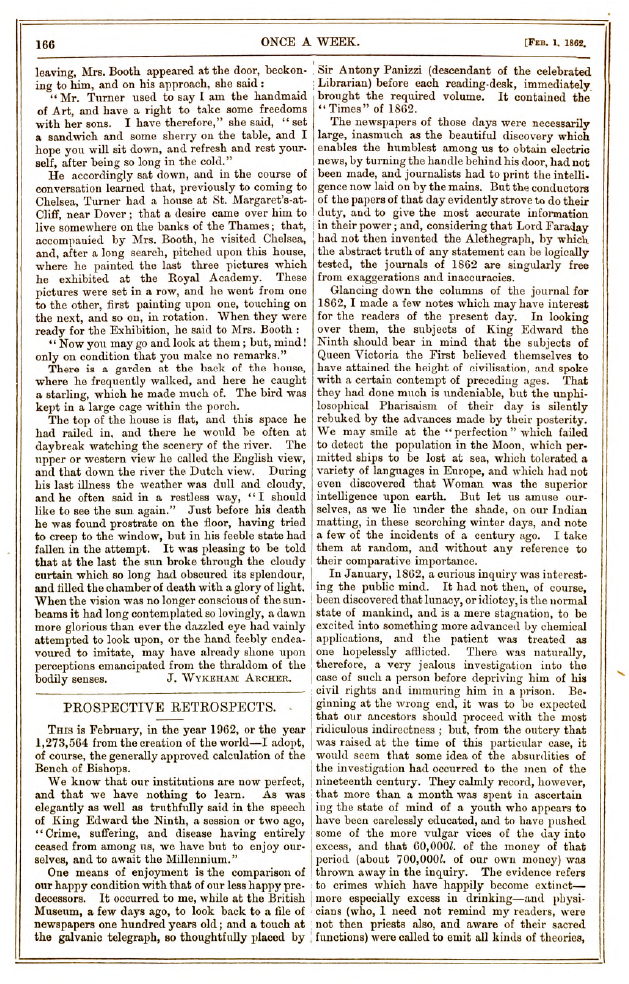
People Mentioned in the Anecdotes Pages 163 to 166 complete J. Wykeham Archer's anecdotes of J.M.W Turner. There is no mention of the other early oils. Archer described his article, on page 162, as 'new and authentic anecdotes'. This is a list of people mentioned in the anecdotes in interactions with Turner:
|
|
|
14 |
.
|
J. M. W. TURNER: THE MYSTERY OF 'THE RISING SQUALL'. PART 3 - HIS FIRST
FOUR OIL PAINTINGS
JMW Turner's First Oil - 'Rochester Castle and the Adjacent Ground' |
1.1 |
|
1.viii; 'Once A Week', 1862; Copy of page 163 | |
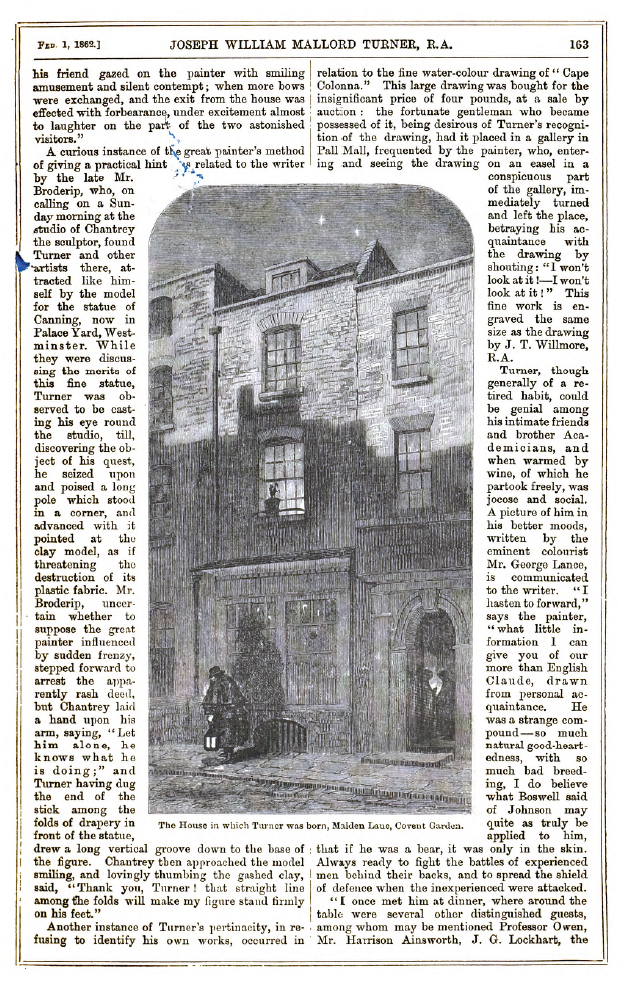 |
||
|
15 |
.
|
J. M. W. TURNER: THE MYSTERY OF 'THE RISING SQUALL'. PART 3 - HIS FIRST
FOUR OIL PAINTINGS
JMW Turner's First Oil - 'Rochester Castle and the Adjacent Ground' |
1.1 |
|
1.ix; 'Once A Week', 1862; Copy of page 164 | |
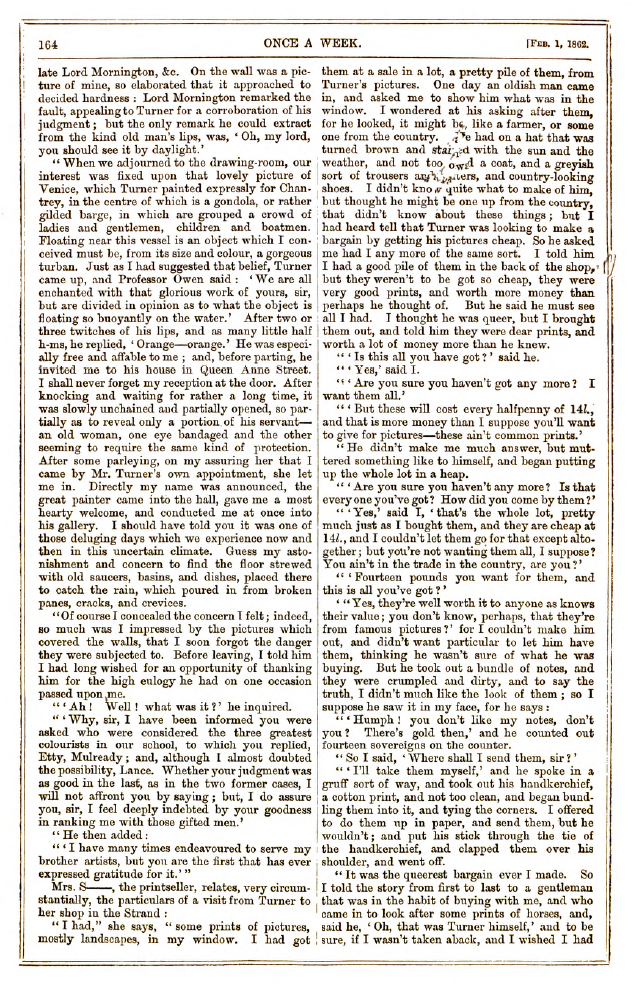 |
||
|
16 |
.
|
J. M. W. TURNER: THE MYSTERY OF 'THE RISING SQUALL'. PART 3 - HIS FIRST
FOUR OIL PAINTINGS
JMW Turner's First Oil - 'Rochester Castle and the Adjacent Ground' |
1.1 |
|
1.x; 'Once A Week', 1862; Copy of page 165 | |
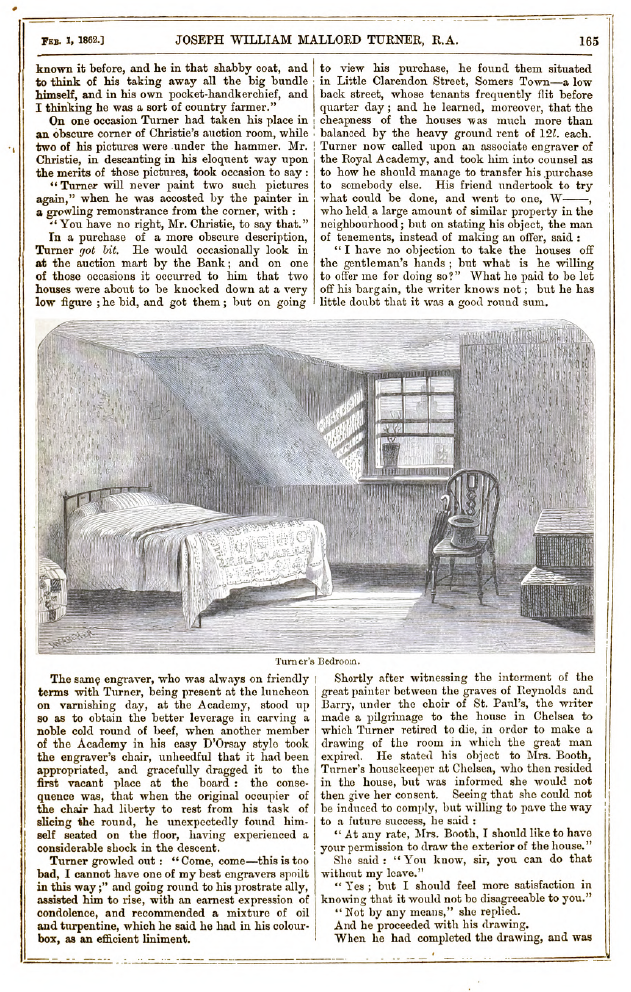 |
||
|
17 |
.
|
J. M. W. TURNER: THE MYSTERY OF 'THE RISING SQUALL'. PART 3 - HIS FIRST
FOUR OIL PAINTINGS
JMW Turner's First Oil - 'Rochester Castle and the Adjacent Ground' |
1.1 |
|
1.xi; 'Once A Week', 1862; Copy of page 166 | |
 |
||
|
18 |
.
|
J. M. W. TURNER: THE MYSTERY OF 'THE RISING SQUALL'. PART 3 - HIS FIRST
FOUR OIL PAINTINGS
JMW Turner's First Oil - 'Rochester Castle and the Adjacent Ground' |
1.1 |
|
Illustrations: Ronald Jessop, 'Man of Many Talents, An Informal Biography of James Douglas 1758-1819'
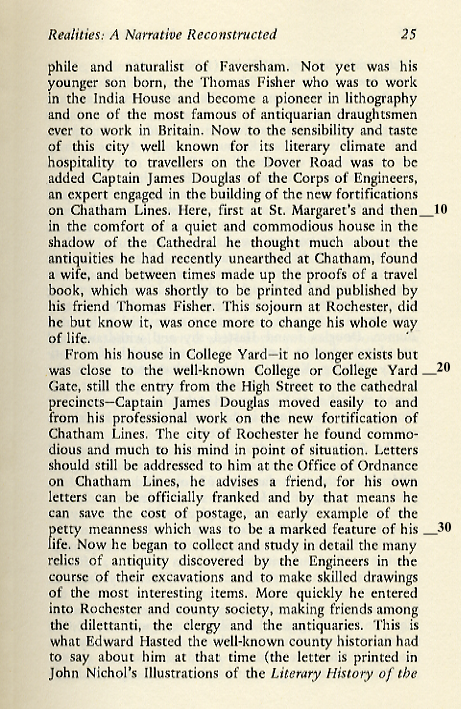
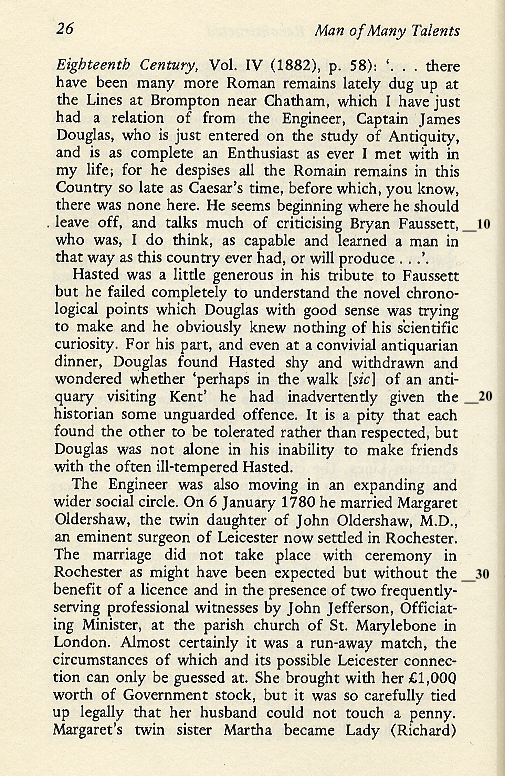
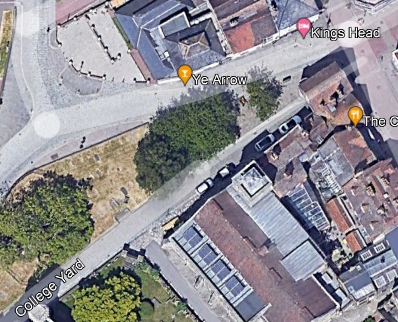
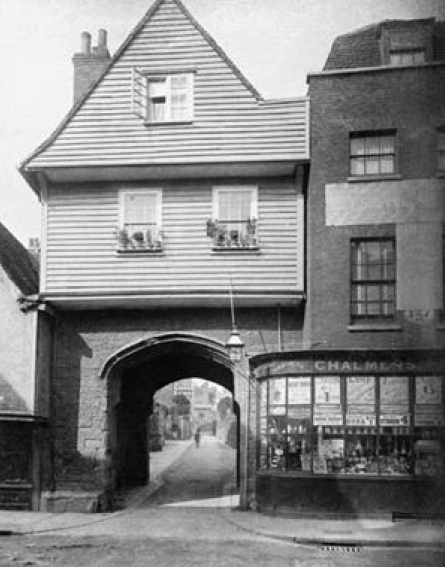
The Rochester Address of Rev. James Douglas On page 25 Jessop wrote of a period when James Douglas 'found a wife' [line 14]. At this time James Douglas lived 'first at St Margaret's and then in the comfort of a quiet and commodious house in the shadow of the cathedral'. St. Margaret's refers to the parish and Jessop does not give a precise location. However, he gives more details of the house 'in the shadow of the cathedral' on line 19 stating that the house no longer exists but was close to the College Yard Gate. Houses on the North-West side of College Yard, near the gate, are seen on a map of 1864 and have since been demolished. James Douglas was married in 1780 to Margaret Oldershaw which Jessop later describes as a 'Runaway Match' (page 26) and incorrectly names her father as 'John Oldershaw' whereas his first name, evident from his will, was actually 'James'. The inheritance mentioned by Jessop did not take place until James Oldershaw died in 1782. His real estate passed to his widow, Elizabeth, for her lifetime. She died in 1796.
The house in College Yard evidently became available to James Douglas at around the time of his marriage. It appears to be James Oldershaw's house; Margaret and James Douglas were living with her parents. If so, it belonged to Elizabeth Oldershaw in 1792 and this is the house in Rochester that Turner visited. |
|
|
19 |
.
|
J. M. W. TURNER: THE MYSTERY OF 'THE RISING SQUALL'. PART 3 - HIS FIRST
FOUR OIL PAINTINGS
JMW Turner's First Oil - 'Rochester Castle and the Adjacent Ground' |
1.1 |
|
1.xii; 'Man Of Many Talents' by Ronald Jessop, page 25 | |
|
||
|
20 |
.
|
J. M. W. TURNER: THE MYSTERY OF 'THE RISING SQUALL'. PART 3 - HIS FIRST
FOUR OIL PAINTINGS
JMW Turner's First Oil - 'Rochester Castle and the Adjacent Ground' |
1.1 |
|
1.xiii; 'Man Of Many Talents' by Ronald Jessop, page 26 | |
|
||
|
21 |
.
|
J. M. W. TURNER: THE MYSTERY OF 'THE RISING SQUALL'. PART 3 - HIS FIRST
FOUR OIL PAINTINGS
JMW Turner's First Oil - 'Rochester Castle and the Adjacent Ground' |
1.1 |
|
The 'quiet and commodious house' which JMW Turner
visited in 1792
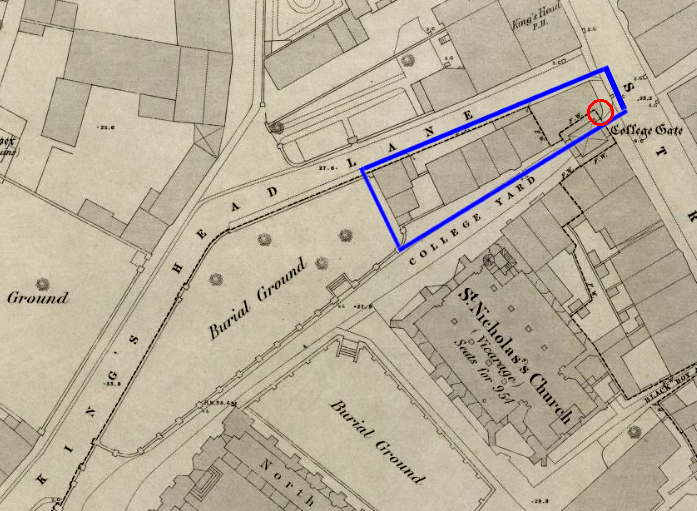
College Yard - Houses in the area outlined in blue
have been demolished
|
|
1.xvi College Gate - The curved corner of the
building on the right (now demolished)
|
||
|
22 |
.
|
J. M. W. TURNER: THE MYSTERY OF 'THE RISING SQUALL'. PART 3 - HIS FIRST
FOUR OIL PAINTINGS
JMW Turner's First Oil - 'Rochester Castle and the Adjacent Ground' |
1.2 |
|
1.2 Similarity of Modus Operandi in June and September 1792 From Finberg's timeline it was found that Turner visited the Narraway family at Bristol in June 1792. In September 1792 he visited Canterbury where he painted 'Gate of St. Augustine's Monastery'. Arising from these comments and looking at watercolours now in the possession of various institutions it is evident that on these two occasions J.M.W. Turner painted two similar watercolours on each occasion; large versions which he exhibited at the Royal Academy and small versions which he gave to his patrons. In Bristol: 'View on the River Avon' - June 1792
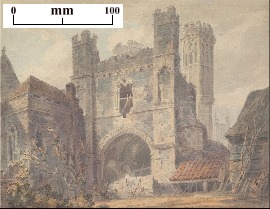
In Kent: 'Gate of St. Augustine's Monastery' - September 1792
It cannot be said with absolute certainty that Bristol K.816 and Yale/Mellon B1975.4.1964 were the 1793 exhibits but it is absolutely certain that Courtauld D.2007.DS.42 (the small one) was not. However, the similarity of Turner's modus operandi around the painting of these two scenes, within a four month period, cannot be overlooked. Bristol curators originally thought that K.816 was 'The rising squall, hot wells, from St. Vincent's rock, Bristol'. It is entirely possible that this mistake was a result of examining a standard reference by C.F.Bell. Bell's mistake is covered in detail in 'J.M.W. Turner: The Mystery of the Rising Squall - Part 1' page 43 'What Went Wrong?'. |
|
|
23 |
.
|
J. M. W. TURNER: THE MYSTERY OF 'THE RISING SQUALL'. PART 3 - HIS FIRST
FOUR OIL PAINTINGS
JMW Turner's First Oil - 'Rochester Castle and the Adjacent Ground' |
1.3 |
|
1.3 First Owners - The Douglas Family Period of Ownership 1792 to 1824 Periods of ownership are examined to determine the locality of the painting at particular times and to find out whether it was exhibited in local exhibitions. 'Rochester Castle and the Adjacent Ground' was in the posession of the Douglas family from 1792 until given to the Nephew by his aunt, Margaret Martha Whiteman Tucker (neé Douglas), referred to above. The date of the gift to her nephew is uncertain; two potential timings emerge:
Marriage of (Rev.) James Douglas and Baptism of his Daughter, 1782 James Douglas married Margaret Oldershaw in 1780 he was ordained in 1783 so the earlier documents show him just as James Douglas. It appears that they lived in Rochester with her father (James Oldershaw, born c.1717) who died in 1782. Their daughter, Margaret Martha Whiteman Douglas was christened shortly after James Oldershaw's death. The Rochester house where James Douglas is said to have lived following his marriage is described as, "a large, comfortable, house in College Yard". This house was almost certainly the Oldershaw residence although the evidence lacks specificity. If so, in 1780 the house belonged to James Oldershaw, by 1792 his widow, Elizabeth, had inherited it as a life tenant. The Douglas Family in the Late Eighteenth Century Rev. James and his wife, Margaret, had three sons, James Bruce born 1785 (he died as an infant), James Edward Moreton born 1794 and Richard William Glode born 1798. Other children are shown in online records but there is no evidence for them and they are more likely to be the result of incorrect automated record matching. Some press coverage at the time of Rev. James' death shows one daughter and three sons. However, James Bruce had died as an infant leaving only two surviving sons. Rev. James Douglas 1785 and his Appointment to Chiddingfold In 1785 Rev. James Douglas moved from Rochester to London, Stanhope Street, then Conduit Vale, Blackheath, Kent (he may have owned this house) then by the end of 1785 he had moved to the parsonage at Chiddingfold. He appears to have occupied the parsonage for around 13 years during which time he was also appointed Rector of Litchborough; but he lived in Chiddingfold from 1785 to around 1798. (Stanhope Street is now NW1 3RJ, Conduit Vale was in the SE10 area.) |
|
|
24 |
.
|
J. M. W. TURNER: THE MYSTERY OF 'THE RISING SQUALL'. PART 3 - HIS FIRST
FOUR OIL PAINTINGS
JMW Turner's First Oil - 'Rochester Castle and the Adjacent Ground' |
1.3 |
|
Turner's Visit to James Douglas at Rochester 1792 In September 1792 J.M.W. Turner, age 17½, visited Rev. James Douglas in Rochester. The evidence is inconsistent; Rev. James Douglas did not live in Rochester in 1792. However, he had previously lived in Rochester, in the large, comfortable, house in College Yard which was almost certainly James Oldershaw's house and which was, by 1792, in the possession of Elizabeth, his widow, as life tenant. So, when the nephew's letter says, of Rev. James Douglas, "... invited him to his house at Rochester ..." ('Once a Week' page 162, col. 1 line 64) 'his house' was more likely to be Elizabeth Oldershaw's house and Turner's visit was timed to coincide with a visit to Rochester by Rev. James Douglas and his family. If so, during Turner's visit, the household potentially consisted of:
In a letter of 1783 Douglas complained of having 'church duties' in Rochester and Strood. [Jessop pages 58-63]. There may have been similar duties requiring his presence in Rochester in September 1792. No evidence has been found of any duties in Rochester at this time. However, Douglas was working on the final drafts of his Nænia Britannica published 1793, by John Nichols and George Nichol of Pall Mall, which may have resulted in frequent trips to London. In 1786 Lowndes, 'London Directory' page 134 shows George Nichol, bookseller, at 441, Strand. It would therefore appear that comments in the Nephew's letter (page 162, col 1, line 38) about Douglas lodging at the house of his bookseller in the Strand are tenable. |
|
|
25 |
.
|
J. M. W. TURNER: THE MYSTERY OF 'THE RISING SQUALL'. PART 3 - HIS FIRST
FOUR OIL PAINTINGS
JMW Turner's First Oil - 'Rochester Castle and the Adjacent Ground' |
1.3 |
|
There is no direct evidence that these family members all lived in the same house in Rochester. The available evidence places each of them in Rochester at some time between 1780 and 1796. There is also no evidence that James Douglas owned any property there. By James Oldershaw's will his wife, Elizabeth, had a life interest in most of his estate. The reality of the situation was probably that Elizabeth owned a life interest in the house at Rochester and permitted the other members of the family to live with her. The major inconsistancy is not in placing JMW Turner in Rochester in 1792 (Finberg, above, provides the timing and the nephew's letter shows the location) but in the whereabouts of Rev. James Douglas and his wife and daughter. However, the corroborative evidence supports the scenario of a 1792 meeting of Turner and the Douglas family in Rochester:
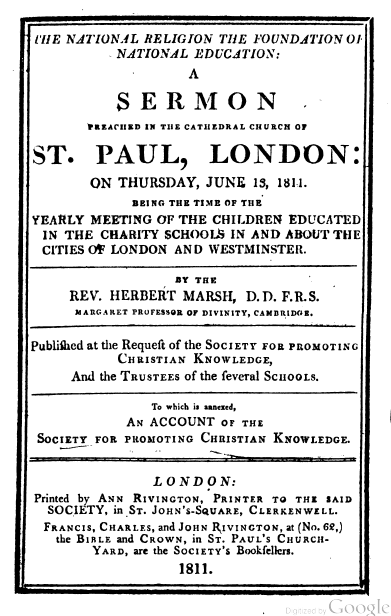
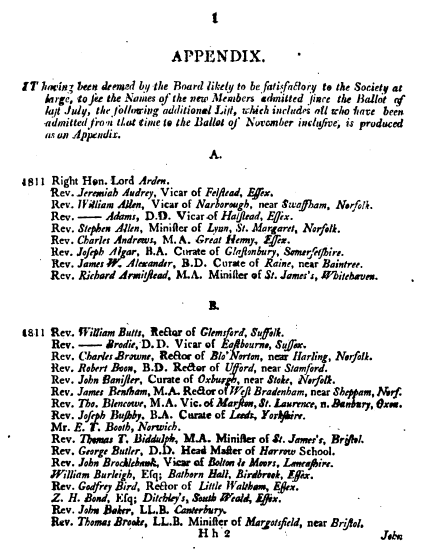
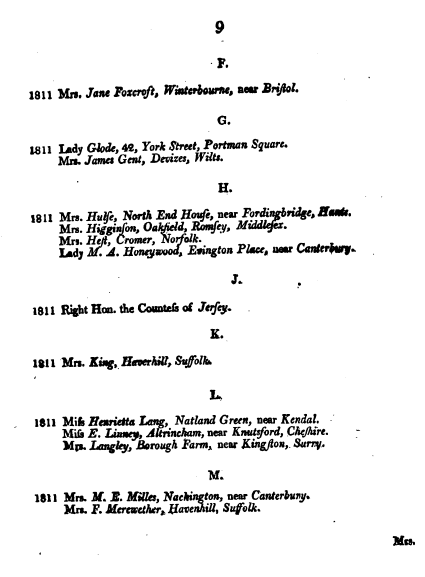
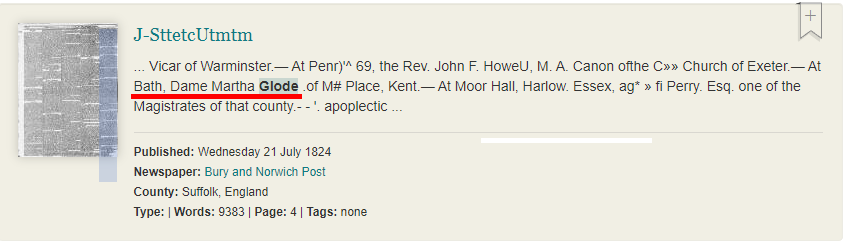
No record has been found of any duties carried out by Rev. James Douglas at Chiddingfold during September 1792, that is during Turner's visit to Rochester. The question of whether Turner gave other paintings to Douglas or to Elizabeth Oldershaw (in return for his accommodation?) actions earlier that year certainly support it we know of at least one other (not Turner) painting in the possession of Margaret Martha Whiteman Tucker (Jessop page 170) Margaret Martha Whiteman Douglas in the Early Nineteenth Century Whether Turner had given 'Rochester Castle and the adjacent ground' directly to Margaret Martha Whiteman Douglas or she had aquired it from her father it is likely that it was in her possession by 1810. Margaret Martha Whiteman Douglas married Mortimer Tucker in 1811; her parish is recorded as St. Marylebone. Their marriage was short; he died in 1818 at Bath where a press report shows his former address as York Street, Portman Square. In 1811 Lady Glode (formerly Martha Oldershaw) was listed in a 'National Religion The Foundation of National Education' document at 42, York Street, Portman Square. Portman Square is in Marylebone.These documents suggest that, before the marriage, Margaret Martha Whiteman Douglas was living with he aunt, Lady Glode, and after the marriage Tuckers were living with Lady Glode, first in London, at 42, York Street, Portman Square, Marylebone, and later in Bath at 1, Lambridge, where Mortimer died in 1818. It is likely that Easter Rudsdell, Martha's older sister, Easter's husband Richard and their daughter, Mary born in 1792, were also living with Lady Glode; there is no separate entry for Rudsdell in Boyle's 1812 or 1814. Richard Rudsell, died in 1814. There is no mention of Lady Glode in Post Office Directories for 1807 or 1814 In the final year of her life, 1823 to1824, Martha assumed the title 'Dame Martha Glode'. From entries in Hunt's 1824 directory it appears that she and Margaret Martha Whiteman Tucker moved to 12 Norfolk Crescent, Bath and 'Mrs. Rudsell' [sic] to 12, Stanhope Street, Bath. It is possible that these two addresses were alternatives for the same house on the junction of the two roads. Martha died in Bath in July 1824 and it was likely that Margaret Martha Whiteman Tucker was living with her until her death. (between 1824 and 1834 (MMWT (age 42-52) did not get mentioned in Easter's will)Easter died in 1839 leaving her estate to her daughter Mary Rookes (neé Rudsdell), born 1792, who continued to live at the same address. The nephew would be a child of a sibling of Mortimer. There is evidence suggesting that a sister of Mortimer (confusingly another Margaret Tucker) lived with or nearby Lady Glode's family in 1821 and 1822. This Margaret Tucker died in 1822. We know from the 'Nephew's Letter' that the gift of the picture was a lifetime gift; not a bequest. As mentioned above it appears that the most likely timing would be during Mortimer's lifetime or when he died. New info dec 2022 - Hunt's (Gye) Bath Directory 1824 shows Lady Glode at 12 Norfolk Crescent, Mrs Rudsell [sic] at 12 Stanhope Street and Tucker Mrs. Mortimer at 12 Norfolk Street. The street index shows only Norfolk crescent, buildings and terrace - there is no norfolk street. ........Gye's 1819 shows Lady Glade[sic] at 1 Lambridge.- no entries for Tucker or Rudsdell. In newspaper Exeter Flying Post 10th Oct. 1839 Easter Rudsdell's address is given as "her house in Great Stanhope Street, Norfolk Crescent, Bath". The death of Martha Glode was reported by Dorset County Chronicle 17th June 1824 "at her house in Queen Square". Easter Rudsdell may also have been living with Dame Martha Glode; Easter Rudsdell's will written in 1834 shows her address as Great Stanhope Street (near Bath City Centre) in the county of Somerset. Pigot's 1830 Somerset, page 680: Mrs Rudsdell 14 Great Stanhope Street. In 1834 Margaret Martha Whiteman Tucker would have been age 52. She does not appear in Easter Rudsdell's will. This may suggest that Margaret Martha Whiteman Tucker died before 1834. |
|
|
19xx |
.
|
J. M. W. TURNER: THE MYSTERY OF 'THE RISING SQUALL'. PART 3 - HIS FIRST
FOUR OIL PAINTINGS
JMW Turner's First Oil - 'Rochester Castle and the Adjacent Ground' |
1.3 |
|
Margaret Martha Whiteman Douglas in the Early Nineteenth Century Documents These relationships are outlined in the following documents:
And there may be extracts from the book
ordered nov 2022
Jessop references to Margaret Martha Whiteman |
|
|
19xx |
.
|
J. M. W. TURNER: THE MYSTERY OF 'THE RISING SQUALL'. PART 3 - HIS FIRST
FOUR OIL PAINTINGS
JMW Turner's First Oil - 'Rochester Castle and the Adjacent Ground' |
1.3 |
|
|
|
|
xx |
.
|
J. M. W. TURNER: THE MYSTERY OF 'THE RISING SQUALL'. PART 3 - HIS FIRST
FOUR OIL PAINTINGS
JMW Turner's First Oil - 'Rochester Castle and the Adjacent Ground' |
1.3 |
|
|
|
|
xx |
.
|
J. M. W. TURNER: THE MYSTERY OF 'THE RISING SQUALL'. PART 3 - HIS FIRST
FOUR OIL PAINTINGS
JMW Turner's First Oil - 'Rochester Castle and the Adjacent Ground' |
1.3 |
|
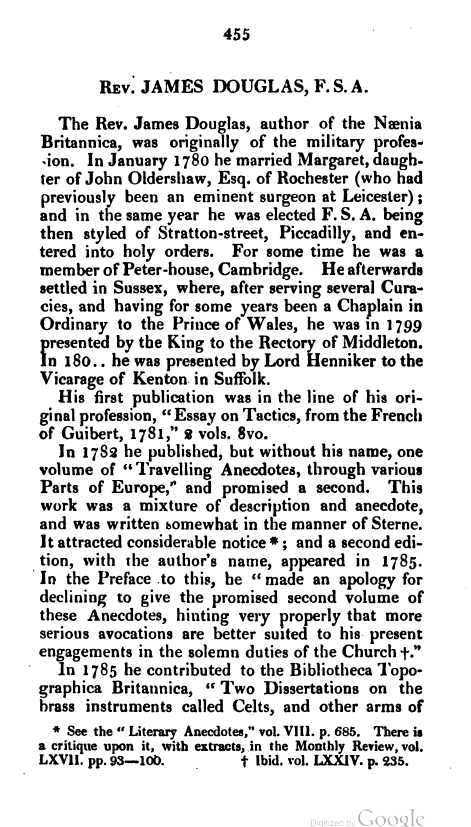
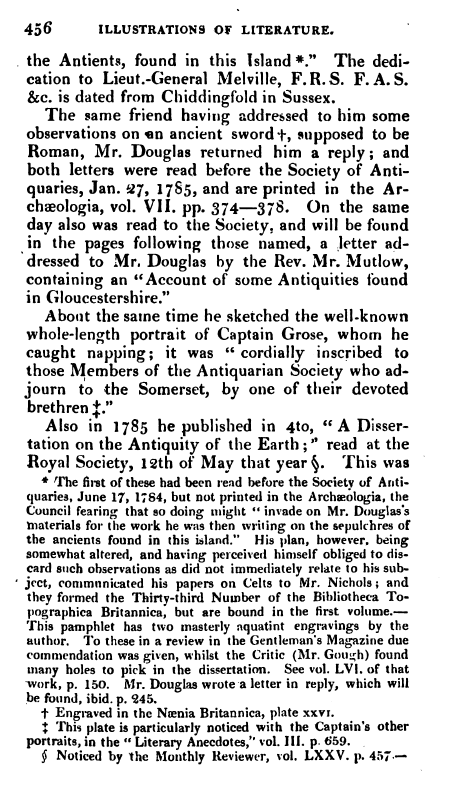
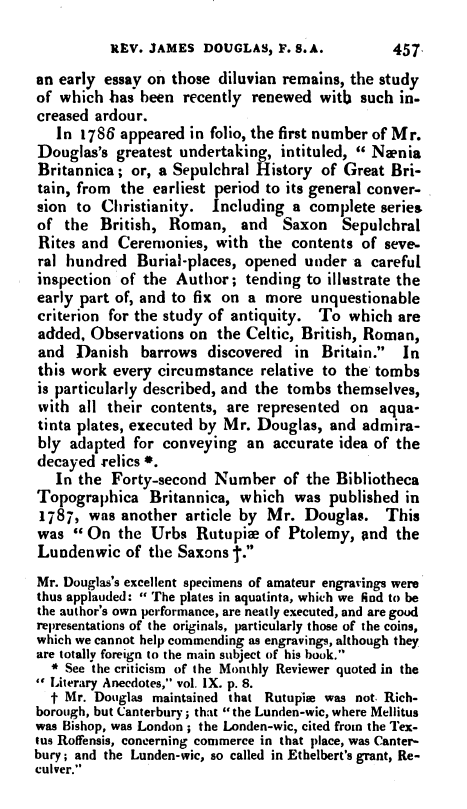
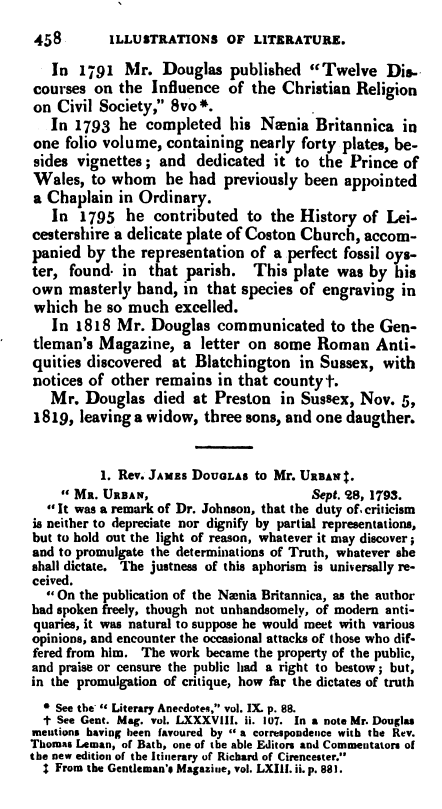
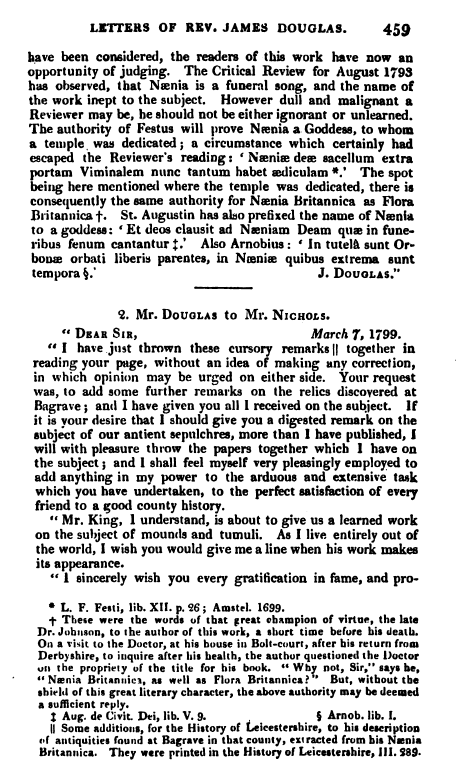
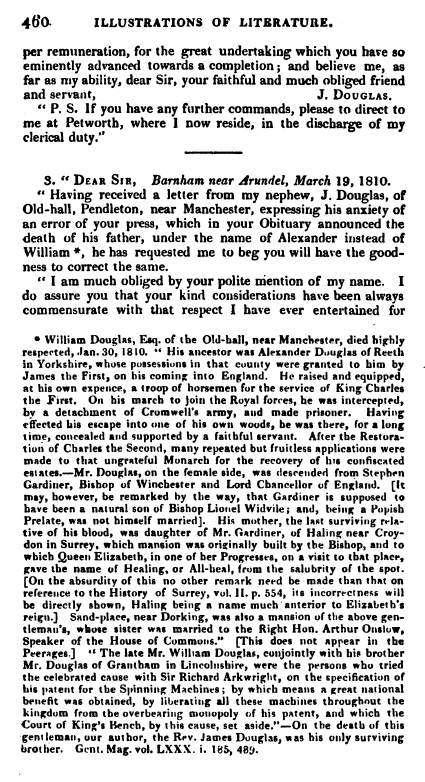
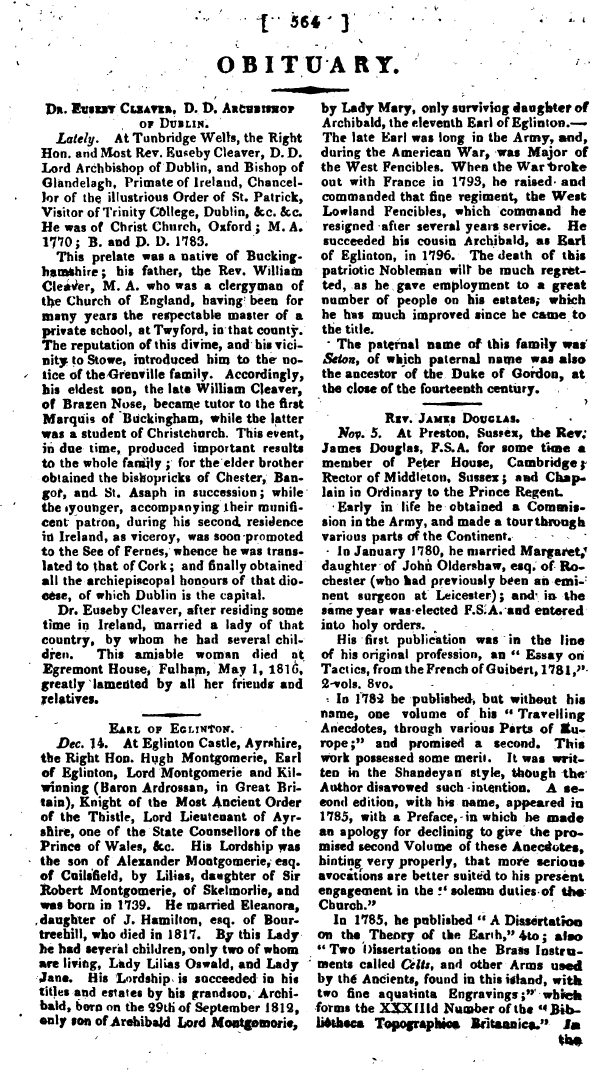
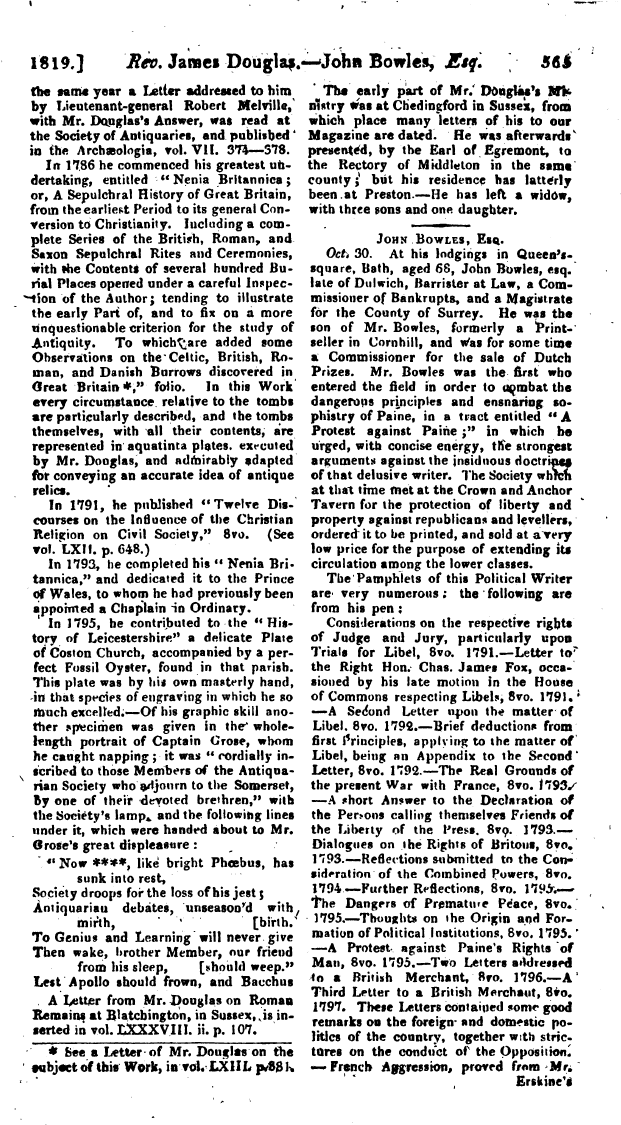
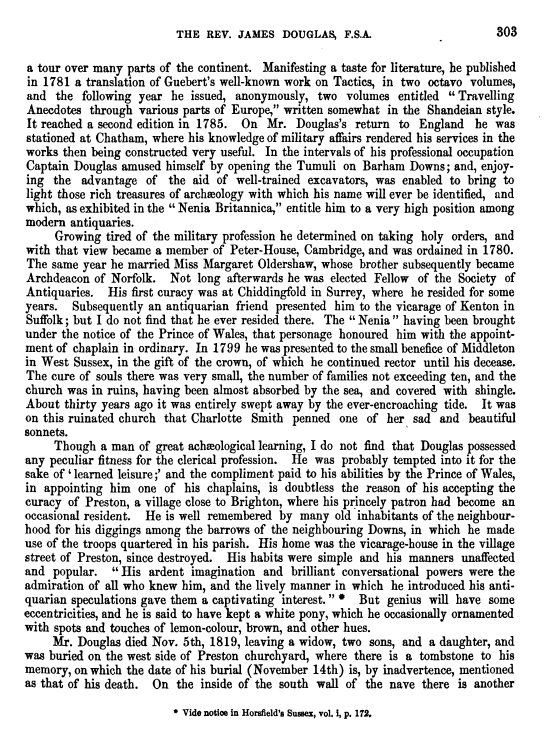
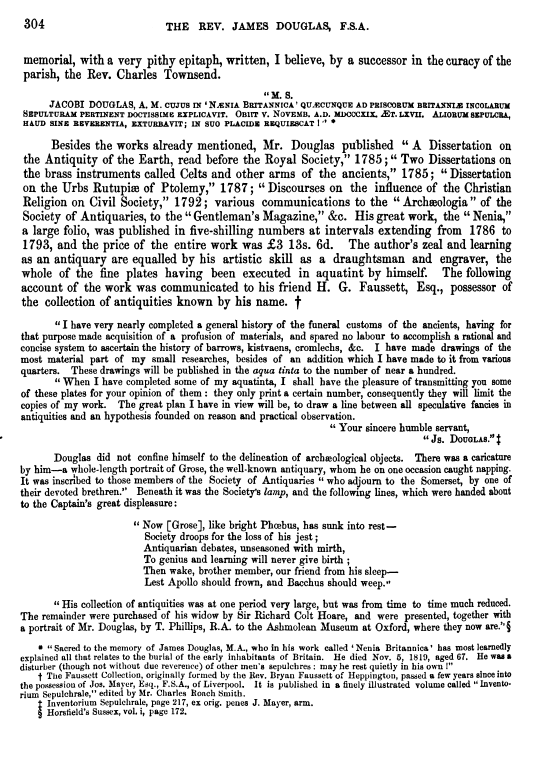
20/940/20 Illustrations: Rev. James Douglas (1753-1819) Biographical Notes The Mystery of Rev. James Douglas' Third Surviving Son In Nichols (and the gentleman's magazine) we see that when he died in 1819 Rev. James Douglas left a widow, three sons and one daughter. There is plentiful evidence that the daughter was Margaret Martha Whiteman Tucker. For two sons there is also much evidence (not illustrated here) including baptism records. These are the "two fine boys" on Nichols' page 461 line 38 (Illustration 1.xxi)(19th March 1810).
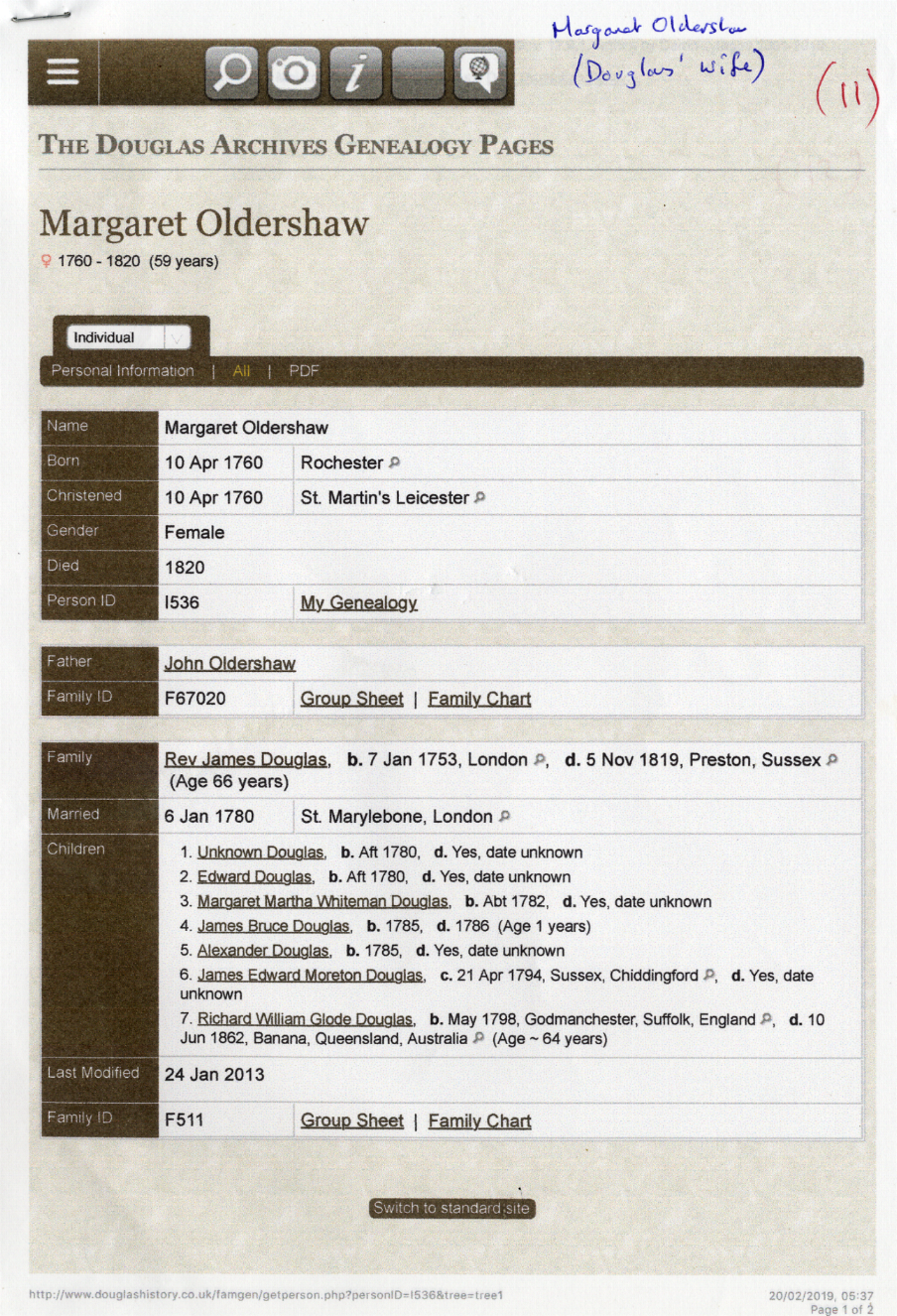
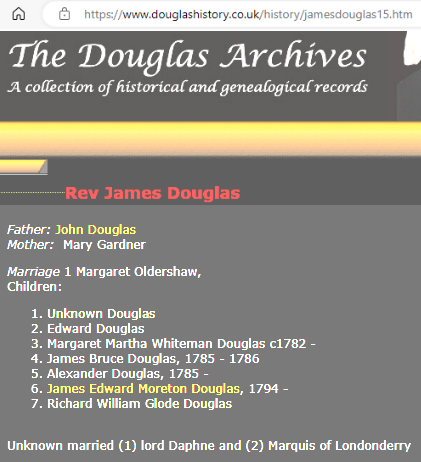
Mark Antony Lower, 'The Worthies of Sussex' (published 1865) (page 303, line 42), shows his surviving family as the widow, daughter and only two surviving sons. There is a baptism record for a third son, (illustrated 1.xxix(b)) James Bruce Douglas showing both the date of birth and the date of baptism; 11th August and 23rd September 1785. His death in October 1785 is recorded in Jessop. There are conflicting records on the internet which show additional children. These are simply wrong; they are possibly the result of automatic cross referencing of many thousands of people with the surname 'Douglas' The father of the Rev. Douglas' wife, Margaret was James Oldershaw. There is internet and literary misinformation naming him as 'John'. In his will he is clearly 'James', 'John' is simply wrong.
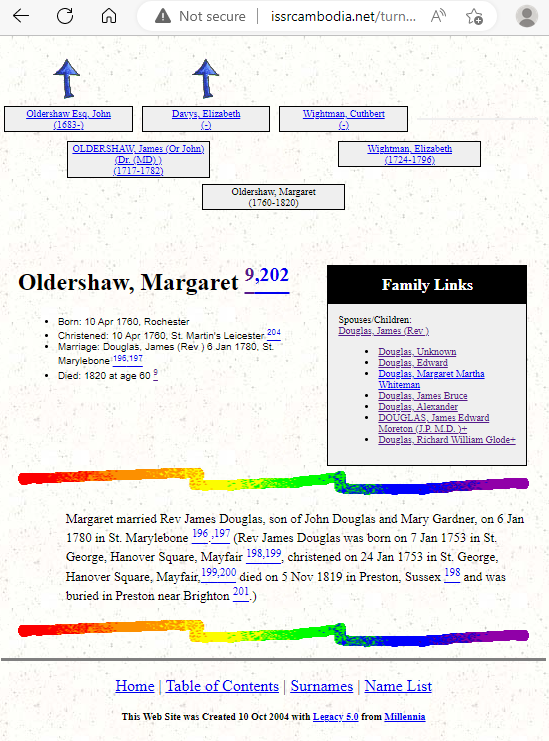
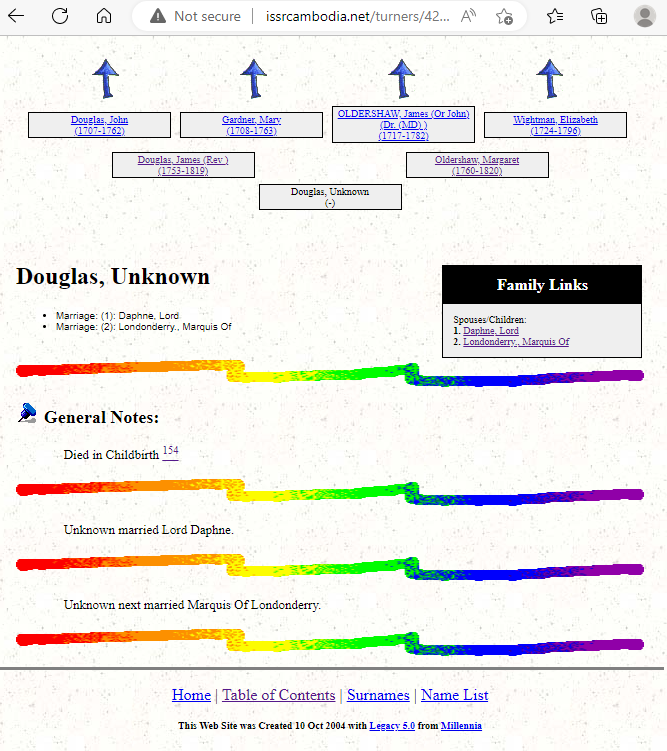
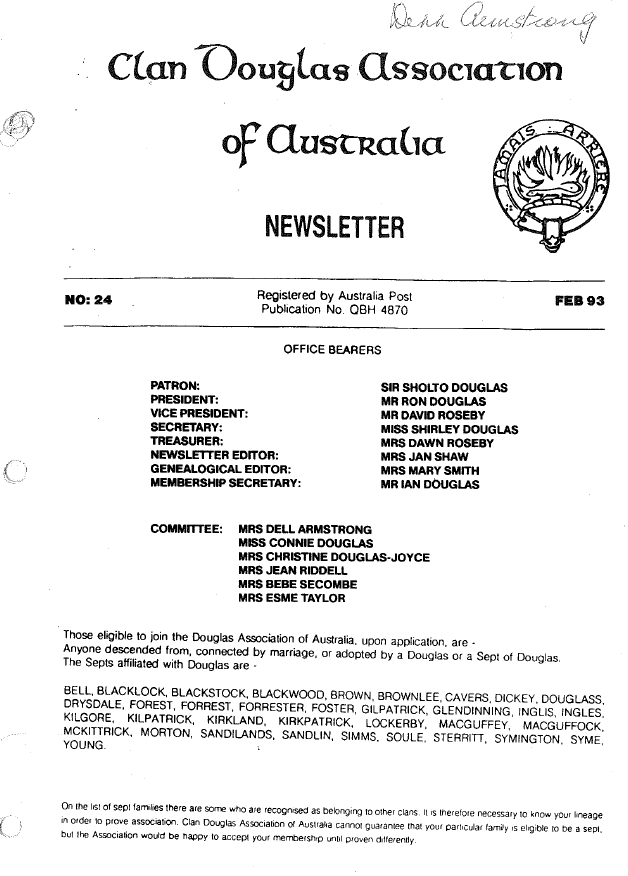
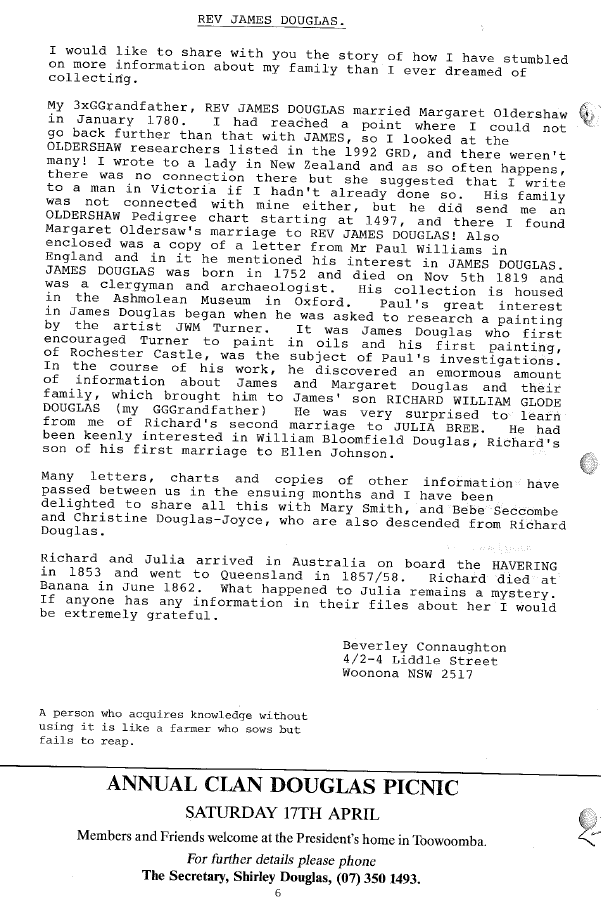
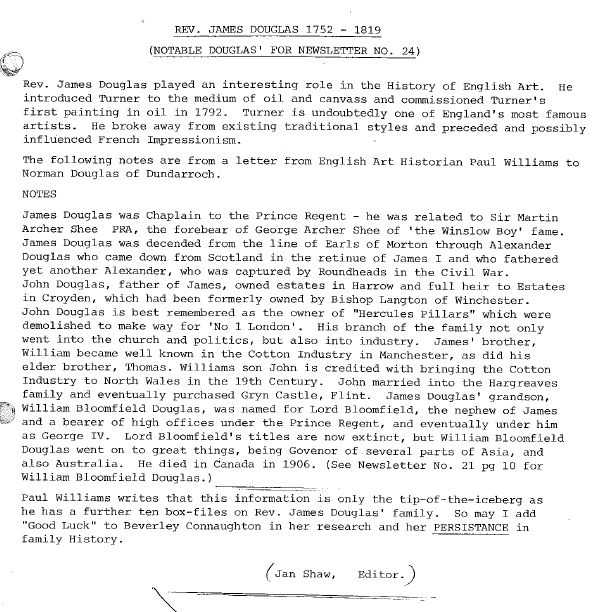
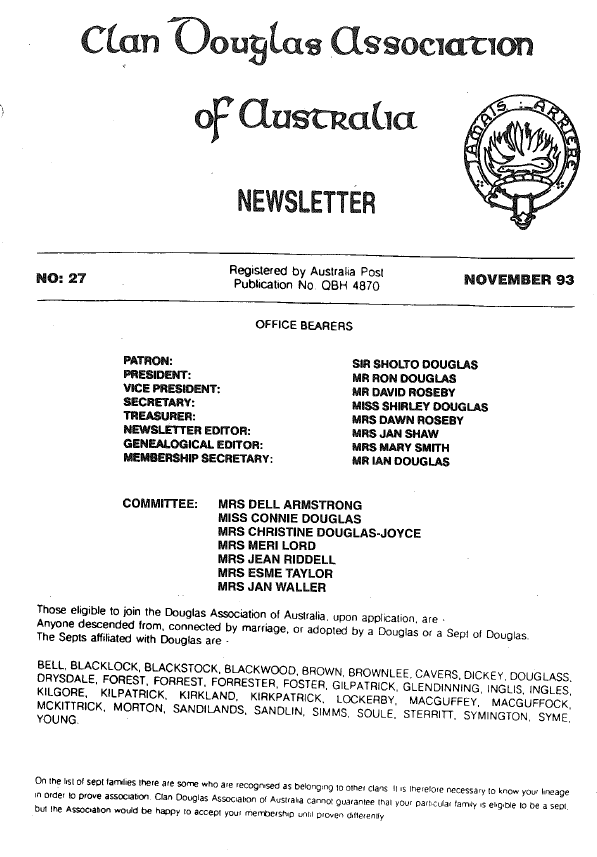
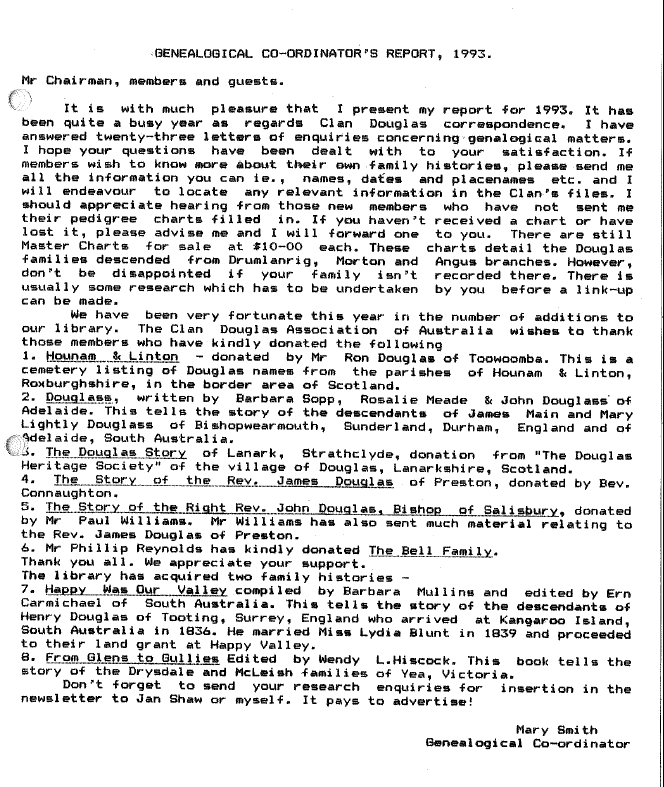
It will be noted that illustrations 1.xxvii(a) and (b) show that James Bruce died in infancy and the source of this is quoted as Bev. Connaughton who in November 1993 was living in Australia at 4/2-4 Liddle Street, Woonona NSW 2517. [Clan Douglas Association of Australia newsletter Feb. 1993] It is also evident that if Alexander existed then he was a twin of James Bruce. Turning to the first two in the list, there is barely enough time for Margaret to have conceived and given birth to this series of children - but it is just possible; a birth in September 1780, Edward in June 1781, Margaret Martha Whiteman in May 1782. Alternatively the first two could have been twins. A further note on illustration 1.xxvii(b) states that the unknown child 1 married Lord Daphne and the Marquis of Londonderry. Neither of these are supported by evidence but if child 1 existed then it was a female. Going back to the Nephew's Letter it is important to eliminate this hearsay evidence because he (or she) said, "An uncle of mine married a daughter of the Reverend J Douglas". If female child 1 existed she would have been 12 when Turner visited in 1792 and could have been the canvas purchaser. Illustrations 1.xxvii(c) and (d) are from the site: issrcambodia.net www (2004) by Beryl Turner 31 Langdon St. Tannum Sands Queensland 4680 Australia. There are two pages of interest. These are the list of children (1.xxvii(c)) and the page for the unknown child(1.xxvii(d)). The latter claims that the unknown first Douglas child died in childbirth and repeats the marriage data; Lord Daphne and the Marquis of Londonderry. A sources page for this site (not illustrated) shows, "154 Charles D Douglas, The Genealogy of the Douglases" as the source of information about these claims. |
|
|
21 |
.
|
J. M. W. TURNER: THE MYSTERY OF 'THE RISING SQUALL'. PART 3 - HIS FIRST
FOUR OIL PAINTINGS
JMW Turner's First Oil - 'Rochester Castle and the Adjacent Ground' |
1.3 | |
|
1.xvi |
1.xvii |
|
1.xviii |
1.xix |
||
|
22 |
||
.
|
J. M. W. TURNER: THE MYSTERY OF 'THE RISING SQUALL'. PART 3 - HIS FIRST
FOUR OIL PAINTINGS
JMW Turner's First Oil - 'Rochester Castle and the Adjacent Ground' |
1.3 | |
|
1.xx |
1.xxi |
|
1.xxii |
1.xxiii |
||
|
23 |
||
.
|
J. M. W. TURNER: THE MYSTERY OF 'THE RISING SQUALL'. PART 3 - HIS FIRST
FOUR OIL PAINTINGS
JMW Turner's First Oil - 'Rochester Castle and the Adjacent Ground' |
1.3 |
|
1.xxiv |
|
|
Extracts from the Will of James Oldershaw (c1717-1782)
|
||
|
24 |
.
|
J. M. W. TURNER: THE MYSTERY OF 'THE RISING SQUALL'. PART 3 - HIS FIRST
FOUR OIL PAINTINGS
JMW Turner's First Oil - 'Rochester Castle and the Adjacent Ground' |
1.3 |
|
1.xxvi; Gentleman's Magazine, December 1819 | |
 |
||
|
25 |
.
|
J. M. W. TURNER: THE MYSTERY OF 'THE RISING SQUALL'. PART 3 - HIS FIRST
FOUR OIL PAINTINGS
JMW Turner's First Oil - 'Rochester Castle and the Adjacent Ground' |
1.3 |
|
1.xxvii; Gentleman's Magazine, December 1819 | |
 |
||
|
26 |
.
|
J. M. W. TURNER: THE MYSTERY OF 'THE RISING SQUALL'. PART 3 - HIS FIRST
FOUR OIL PAINTINGS
JMW Turner's First Oil - 'Rochester Castle and the Adjacent Ground' |
1.3 | |
|
 |
www
pages relating to the children of Rev. James Douglas and his wife,
Margaret (neé Oldershaw)
|
|
 |
|||
 |
 |
||
|
27 |
||
.
|
J. M. W. TURNER: THE MYSTERY OF 'THE RISING SQUALL'. PART 3 - HIS FIRST
FOUR OIL PAINTINGS
JMW Turner's First Oil - 'Rochester Castle and the Adjacent Ground' |
1.3 |
|
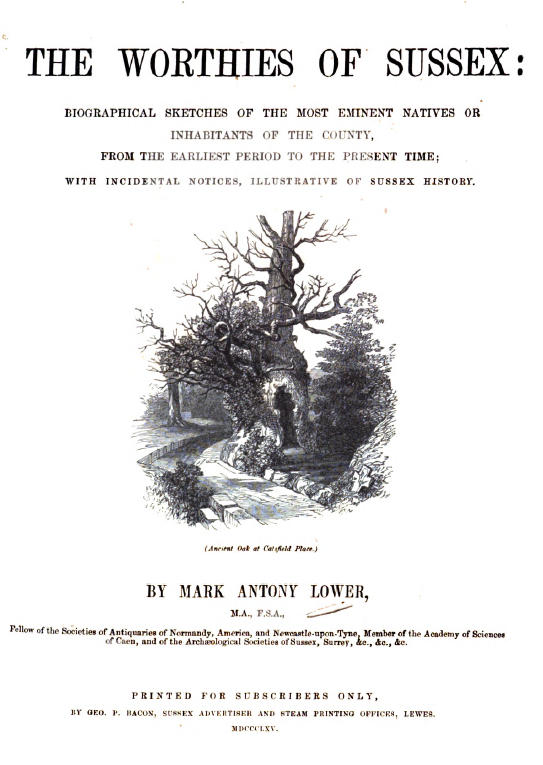
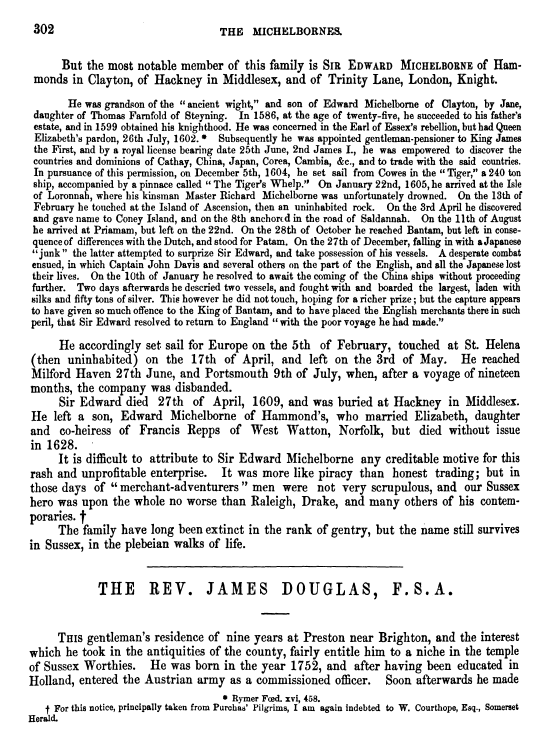
Mark
Antony Lower
The Worthies Of Sussex
|
|
|
28 |
.
|
J. M. W. TURNER: THE MYSTERY OF 'THE RISING SQUALL'. PART 3 - HIS FIRST
FOUR OIL PAINTINGS
JMW Turner's First Oil - 'Rochester Castle and the Adjacent Ground' |
1.3 |
|
Mark
Antony Lower
The Worthies Of Sussex
|
|
|
28 |
.
|
J. M. W. TURNER: THE MYSTERY OF 'THE RISING SQUALL'. PART 3 - HIS FIRST
FOUR OIL PAINTINGS
JMW Turner's First Oil - 'Rochester Castle and the Adjacent Ground' |
1.3 |
|
Mark
Antony Lower
The Worthies Of Sussex
|
|
|
28 |
.
|
J. M. W. TURNER: THE MYSTERY OF 'THE RISING SQUALL'. PART 3 - HIS FIRST
FOUR OIL PAINTINGS
JMW Turner's First Oil - 'Rochester Castle and the Adjacent Ground' |
1.3 |
|
Mark
Antony Lower
The Worthies Of Sussex
|
|
|
28 |
.
|
J. M. W. TURNER: THE MYSTERY OF 'THE RISING SQUALL'. PART 3 - HIS FIRST
FOUR OIL PAINTINGS
JMW Turner's First Oil - 'Rochester Castle and the Adjacent Ground' |
1.3 |
|
Clan
Douglas
|
|
|
28 |
.
|
J. M. W. TURNER: THE MYSTERY OF 'THE RISING SQUALL'. PART 3 - HIS FIRST
FOUR OIL PAINTINGS
JMW Turner's First Oil - 'Rochester Castle and the Adjacent Ground' |
1.3 |
|
Clan
Douglas
|
|
|
28 |
.
|
J. M. W. TURNER: THE MYSTERY OF 'THE RISING SQUALL'. PART 3 - HIS FIRST
FOUR OIL PAINTINGS
JMW Turner's First Oil - 'Rochester Castle and the Adjacent Ground' |
1.3 |
|
Clan
Douglas
|
|
|
28 |
.
|
J. M. W. TURNER: THE MYSTERY OF 'THE RISING SQUALL'. PART 3 - HIS FIRST
FOUR OIL PAINTINGS
JMW Turner's First Oil - 'Rochester Castle and the Adjacent Ground' |
1.3 |
|
Clan
Douglas
|
|
|
28 |
.
|
J. M. W. TURNER: THE MYSTERY OF 'THE RISING SQUALL'. PART 3 - HIS FIRST
FOUR OIL PAINTINGS
JMW Turner's First Oil - 'Rochester Castle and the Adjacent Ground' |
1.3 |
|
Clan
Douglas
|
|
|
28 |
.
|
J. M. W. TURNER: THE MYSTERY OF 'THE RISING SQUALL'. PART 3 - HIS FIRST
FOUR OIL PAINTINGS
JMW Turner's First Oil - 'Rochester Castle and the Adjacent Ground' |
1.3 |
|
Reserved
for anythig that may be found in the book ordered Nov 2022
|
|
|
28 |
.
|
J. M. W. TURNER: THE MYSTERY OF 'THE RISING SQUALL'. PART 3 - HIS FIRST
FOUR OIL PAINTINGS
JMW Turner's First Oil - 'Rochester Castle and the Adjacent Ground' |
1.3 |
|
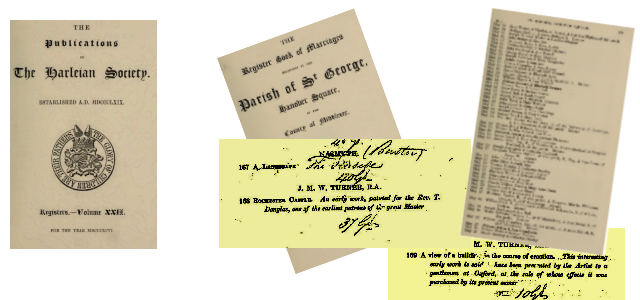
Illustrations: Documents Recording Specific Events Associated with the Douglas Family These documents begin with the marriage of James Douglas to Margaret Oldershaw in January 1780. The Marriage took place in London at St. Marylebone; their parishes of residence are not recorded. As we saw in the previous section Margaret's father, James Oldershaw, wrote his will in October 1780, naming himself as 'James Oldershaw of the City of Rochester'. He died in 1782; probate was granted in May 1782 and showed that the family lived in Rochester at that time. On 29th June 1782 Margaret Martha was baptised in Rochester. Her date of birth is not recorded. However, the baptism record for her brother James Bruce Douglas shows both the date of birth and the date of baptism; 11th August and 23rd September 1785. Applying a similar time lapse between birth and baptism for Margaret Martha Whiteman Douglas would suggest a date of birth in May 1782. The next set of illustrations shows the marriage of Mortimer Tucker to Margaret Martha Whiteman Douglas. The place is Parish of St. George, Hanover Square and the date is in the register; May 23rd 1811. A newspaper announcement shows that Rev. J. Douglas was Rector at Middleton, Sussex at that time. Mortimer's death was reported in 'The Morning Post' 21st December 1818. This report shows the place of death, Bath. It also shows a previous address in York Street, Portman Square, London and it is these two addresses that provide a link between Lady Glode (formerly Martha Oldershaw) and the Tuckers. Lady Glode was Margaret Martha Whiteman Tucker's aunt, the twin sister of her mother (see Illustration 1.xxiv). |
|
|
28 |
.
|
J. M. W. TURNER: THE MYSTERY OF 'THE RISING SQUALL'. PART 3 - HIS FIRST
FOUR OIL PAINTINGS
JMW Turner's First Oil - 'Rochester Castle and the Adjacent Ground' |
1.3 | |
|
(Illustrations: Documents Recording Specific Events Associated with the Douglas Family) | ||
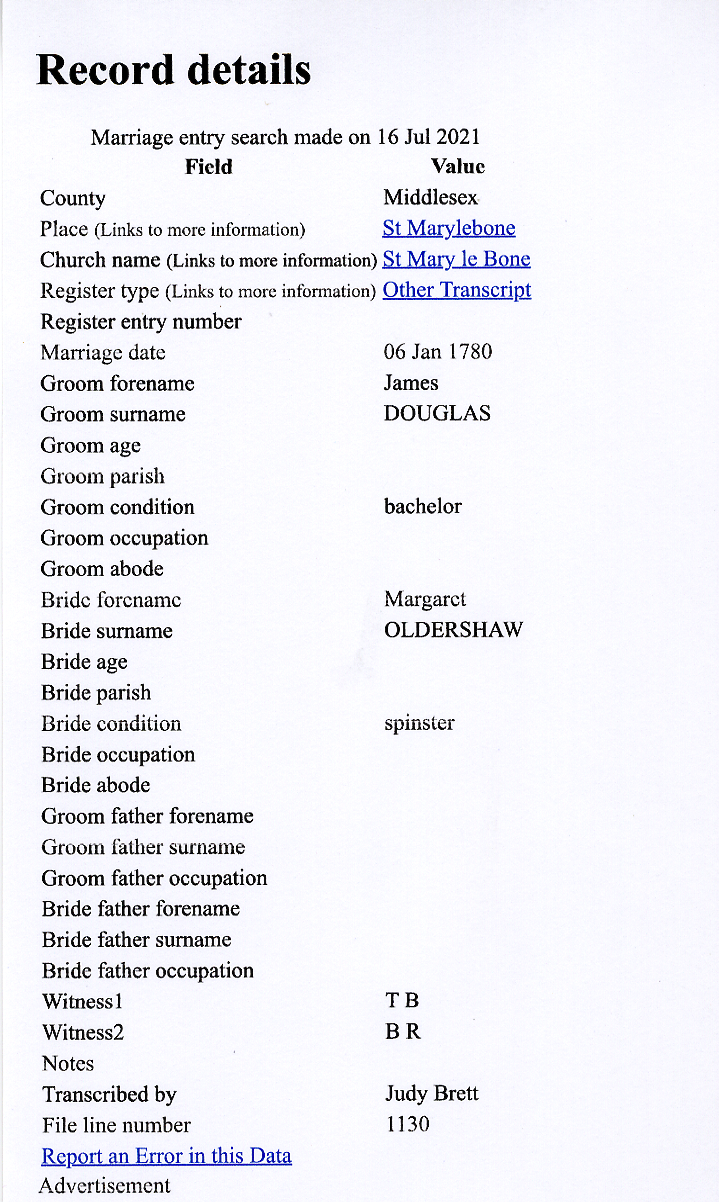
1.xxxxxxxxxxxxxxxxxxxxxxxxxxx Record of the marriage of James Douglas and Margaret Oldershaw. |
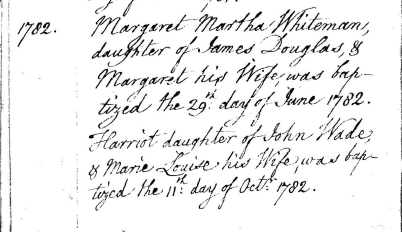
1.xxxxxxxxxxxxxx A copy of the manuscript entry from the Register of the Cathedral Church at Rochester, baptism of Margaret Martha Whiteman Douglas in 1782. |
||
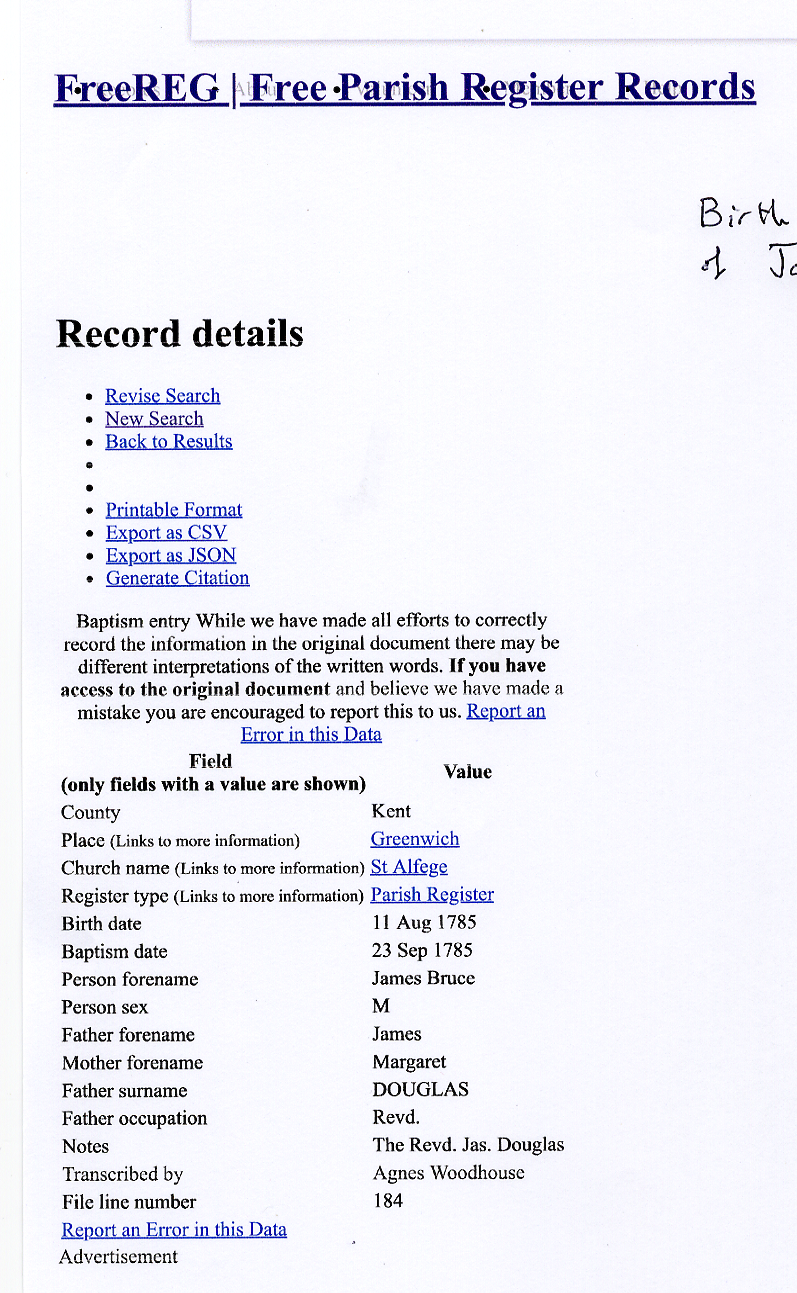
1.xxxxxxxxxxxxxxxxxxxx Her brother's baptism record shows both his date of birth and date of baptism |
|||
|
29 |
||
.
|
J. M. W. TURNER: THE MYSTERY OF 'THE RISING SQUALL'. PART 3 - HIS FIRST
FOUR OIL PAINTINGS
JMW Turner's First Oil - 'Rochester Castle and the Adjacent Ground' |
1.3 |
|
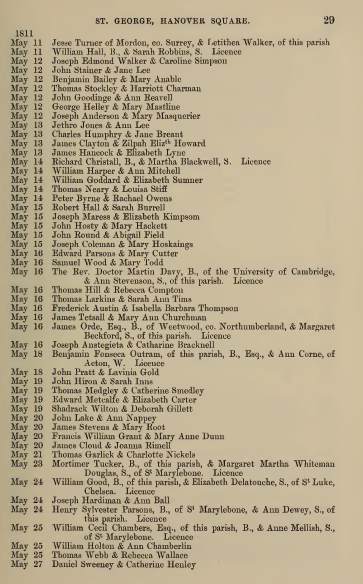
Register of the Parish of St George, Hanover Square, (London), Page 29 shows the Margaret Martha Whiteman Douglas marriage to Mortimer Tucker on May 23rd 1811. In the Nephew's Letter of March 1857 from 'Once A Week' magazine, February 1st 1862, page 162, he wrote, "An uncle of mine married a daughter of the Reverend J Douglas". |
|
|
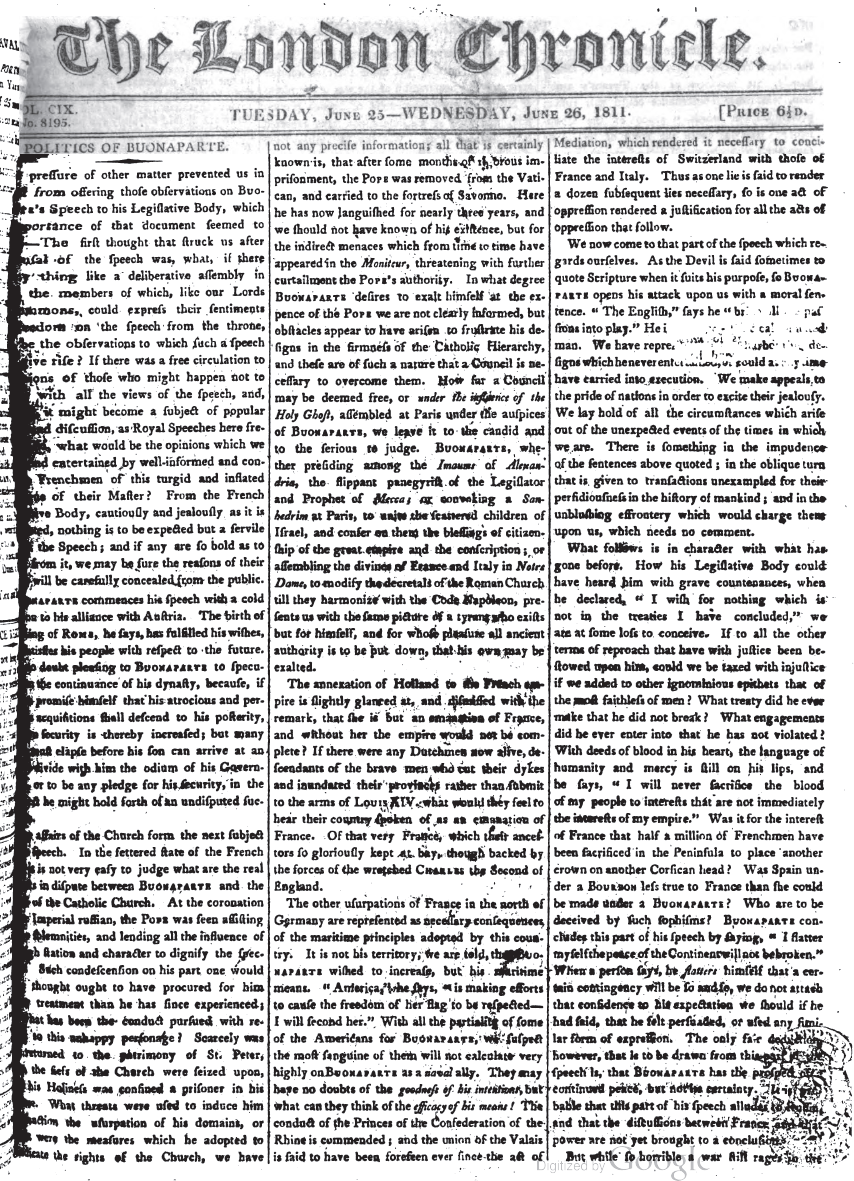
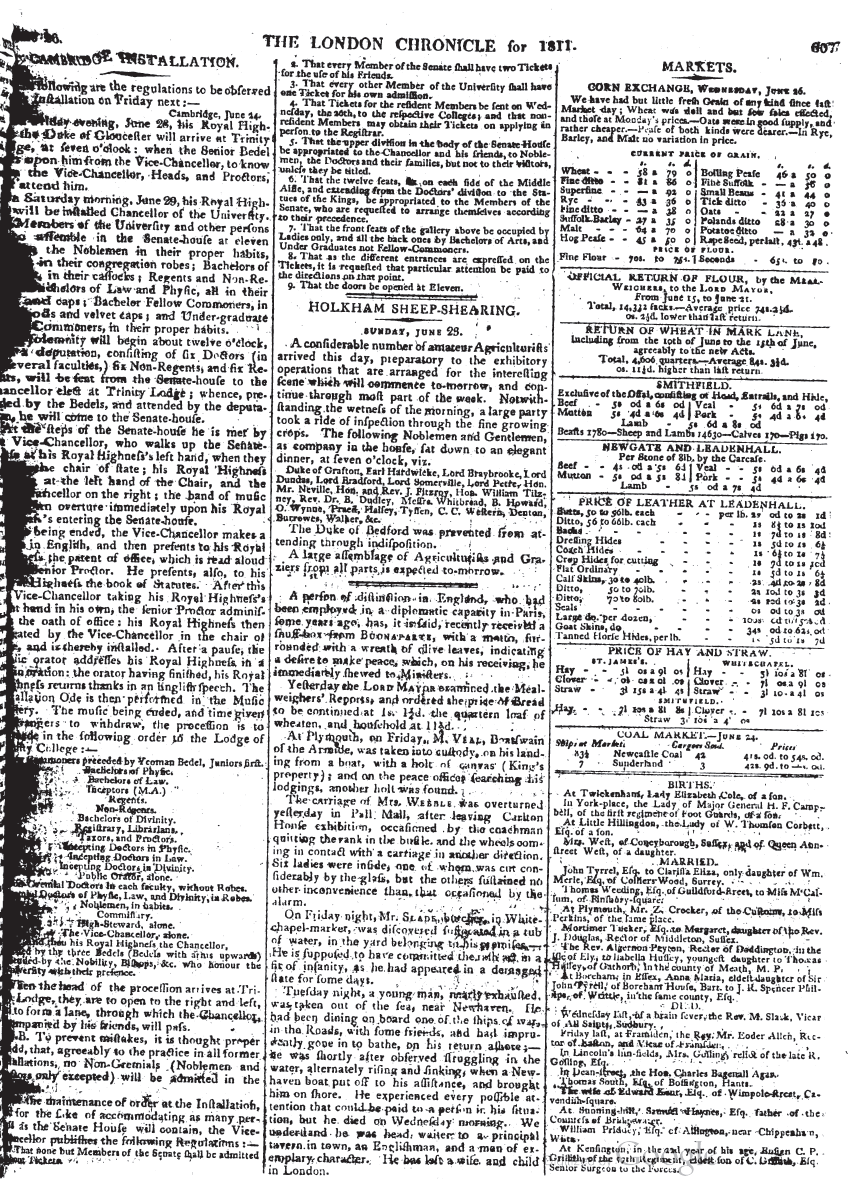
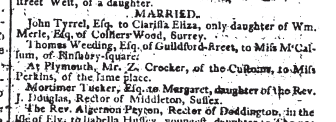
In 'The London Chronicle' Tuesday June 25th - Wednesday June 26, 1811 (page 607, col 3): "Mortimer Tucker, Esq., to Margaret, daughter of the Rev. J. Douglas, Rector of Middleton, Sussex." |
||
|
30 |
.
|
J. M. W. TURNER: THE MYSTERY OF 'THE RISING SQUALL'. PART 3 - HIS FIRST
FOUR OIL PAINTINGS
JMW Turner's First Oil - 'Rochester Castle and the Adjacent Ground' |
1.3 |
|
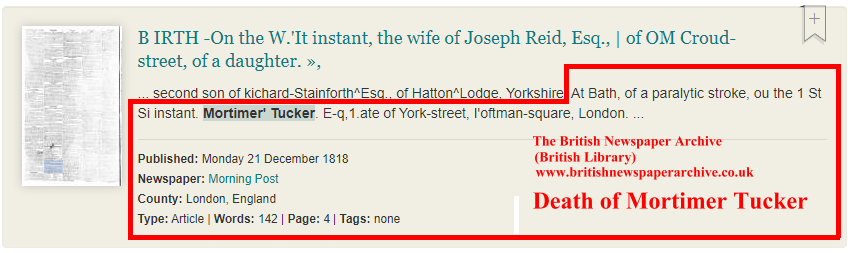
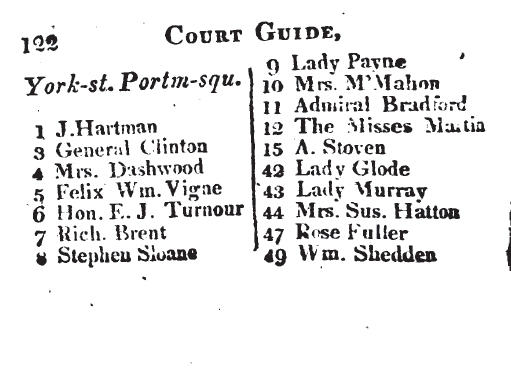
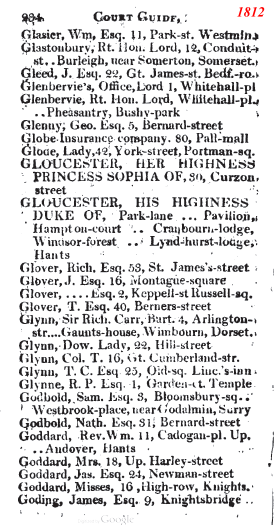
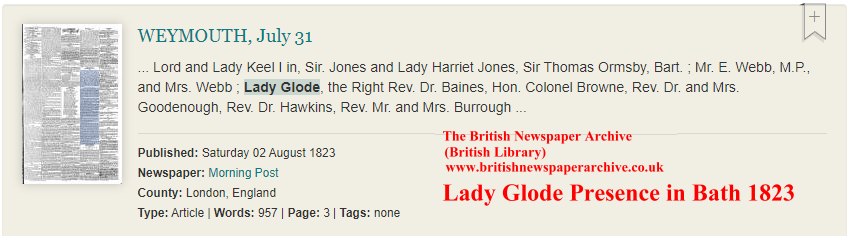
1.xxxxxxxxxxxxx Mortimer Tucker died in Bath; Late of York Street Portman Square, London This places Margaret Martha and Mortimer Tucker (and the painting) with Lady Glode in London before moving to Bath. Illustrations: Documents that Help to Trace Margaret Martha Whiteman Tucker's Later Movements and thus the Whereabouts of Turner's First Oil. Lady Glode (formerly Martha Oldershaw; later Dame Matha Glode) Evidence of the death of Mortimer Tucker places him in York Street Portman Square, London before moving to Bath. Mortimer Tucker was married to Margaret Martha Whitman Douglas on 23rd May 1811. His parish of residence was recorded as 'St. George, Hanover Square'. His forename was recorded only as 'Mortimer'; however, later, in 1817, he is recorded as 'Edward Mortimer Tucker' in Dame Martha Glode's will. In 1811 a sermon that took place at St. Pauls on 13th June was published by 'The National Religion The Foundation of National Education'. An appendix included a list of admissions to the society for that year. On page 9 we find 'Lady Glode, 42 York Street, Portman Square. This is the same address, with the exception of the house number, as shown in the announcement of Mortimer Tucker's death.
York Street no longer exists. The Parish of St George and Portman Square are close together just North of Oxford Street. It seems likely that Margaret Martha Whitman Douglas was living with her aunt at 42, York St., and Mortimer Tucker was living nearby. The Tuckers apparently continued to live with Lady Glode after their marriage. We do not have any evidence of the whereabouts or age of the nephew at this time. Evidence in the Nephew's letter places Turner's first oil with Margaret Martha Whiteman Tucker during her lifetime. It seems safe to assume that the picture was housed with her at 42 York St.
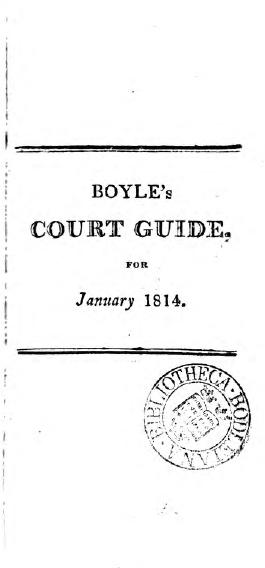
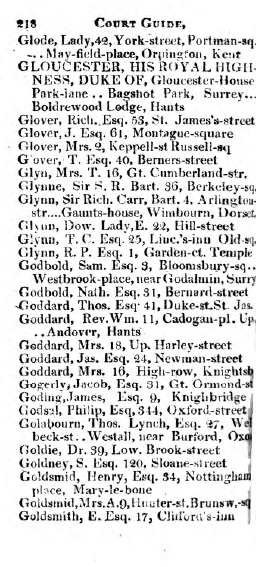
The evidence continues in Boyle's Court Guide in 1812. Here we find Lady Glode at 42 York St. The house numbers are not continuous but we do not find a separate entry for Mortimer Tucker thus supporting the proposition that he was living with Lady Glode. Moving on to 1814 Boyles gives additional information showing Lady Glode's out of town address in Orpington. This corroborates her identity and shows that she had not yet taken up residence in Bath.
20 940 20 |
|
|
31 |
.
|
J. M. W. TURNER: THE MYSTERY OF 'THE RISING SQUALL'. PART 3 - HIS FIRST
FOUR OIL PAINTINGS
JMW Turner's First Oil - 'Rochester Castle and the Adjacent Ground' |
1.3 | |
| 1.xxxxxxxxxxxxxxxxxxxxxxxxxxNational | |||
|
|
 |
|
 |
|||
|
32 |
||
.
|
J. M. W. TURNER: THE MYSTERY OF 'THE RISING SQUALL'. PART 3 - HIS FIRST
FOUR OIL PAINTINGS
JMW Turner's First Oil - 'Rochester Castle and the Adjacent Ground' |
1.3 |
|
20 940 20 |
|
|
33 |
.
|
J. M. W. TURNER: THE MYSTERY OF 'THE RISING SQUALL'. PART 3 - HIS FIRST
FOUR OIL PAINTINGS
JMW Turner's First Oil - 'Rochester Castle and the Adjacent Ground' |
1.3 | |
|
20/940/20 Boyles 1814 also shows Lady Glode in Orpington and thus corroborating her identity. |
||
 |
 |
||
|
34 |
||
.
|
J. M. W. TURNER: THE MYSTERY OF 'THE RISING SQUALL'. PART 3 - HIS FIRST
FOUR OIL PAINTINGS
JMW Turner's First Oil - 'Rochester Castle and the Adjacent Ground' |
1.3 |
|
A question arises as to whether the nephew was also living with them. In lLondon in 1811 to 1814; in Bath Dates would be some time after 1815 up to 1818 when Mortimer died and possibly beyond. Boyles 1814 has Lady Glode at 42 York St, Portman Sq and May-field-place Orpington Kent Newspaper exracts Sun London has her in Departures in 1815 and in 1816 30 may BathChronicle and Weekly Gazette has her in 1, Lambridge with an excellent lawn... 

20 940 20 |
|
|
35 |
.
|
J. M. W. TURNER: THE MYSTERY OF 'THE RISING SQUALL'. PART 3 - HIS FIRST
FOUR OIL PAINTINGS
JMW Turner's First Oil - 'Rochester Castle and the Adjacent Ground' |
1.3 |
|
20/940/20 Martha's Will / Probate. Confirms Margaret Martha survives her father, and 'Edward' Mortimer. |
|
|
# |
.
|
JMW Turner's First Oil - 'Rochester Castle and the Adjacent Ground' | 1 |
|
Details about Margaret Martha Whiteman Douglas Arising from the Documents Margaret Martha Whiteman Douglas met JMW Turner in September 1792 (Finberg: pages 21, 22 & 23) and later claimed that it was she who purchased the canvas for his first oil painting (Nephew's Letter). |
|
|
# |
.
|
J. M. W. TURNER: THE MYSTERY OF 'THE RISING SQUALL'. PART 3 - HIS FIRST
FOUR OIL PAINTINGS
JMW Turner's First Oil - 'Rochester Castle and the Adjacent Ground' |
1.3 |
|
1.4
Mortimer Tucker's Nephew
20 940 20 |
|
|
# |
.
|
JMW Turner's First Oil - 'Rochester Castle and the Adjacent Ground' | 1 |
|
Mortimer Tucker's Nephew The Nephew's Description of his Family Relationship Mortimer Tucker is described in the Nephew's letter as:
Thus is the Rev. James Douglas identified beyond doubt and leads to the identification of the daughter, Margaret Martha Whiteman Douglas, her one marriage to Mortimer Tucker and thus to the identification of the nephew (or niece) who must be the son (or daughter) of a brother or sister of Mortimer Tucker. Mortimer also Known as Edward Mortimer Margaret Martha Whiteman Douglas was the niece of Martha Oldershaw who in 1893 married (Sir) Richard Glode. She assumed the title 'Lady Glode'. Later, after his death, she assumed the title 'Dame Martha Glode' and this is how she styled herself in her will written in 1817. It appears that her will, at the time written, referred to her niece as 'Margaret Tucker'. However, the witnesses seem to have inserted the two extra forenames so that the transcript becomes:
The spelling, 'Wightman' was that used by her grandmother. Mortimer, it appears, was also known as 'Edward Mortimer' Precise Identification of the Nephew It has not been possible to precisely identify the nephew. This is a summary of the facts that may have influenced the movement of the painting 'Rochester Castle and the Adjacent Ground'
|
|
|
# |
.
|
JMW Turner's First Oil - 'Rochester Castle and the Adjacent Ground' | 1 |
|
Dr. William Hering The painting was in the possession of Dr. William Hering before 1845 until at least 1860.
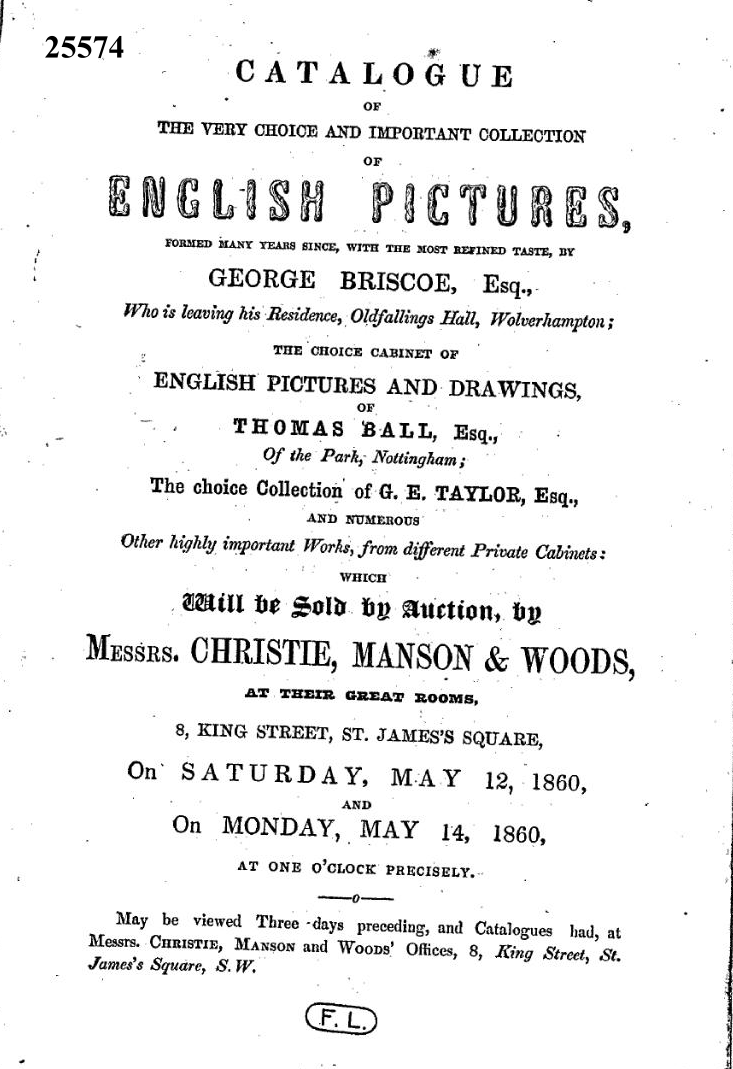
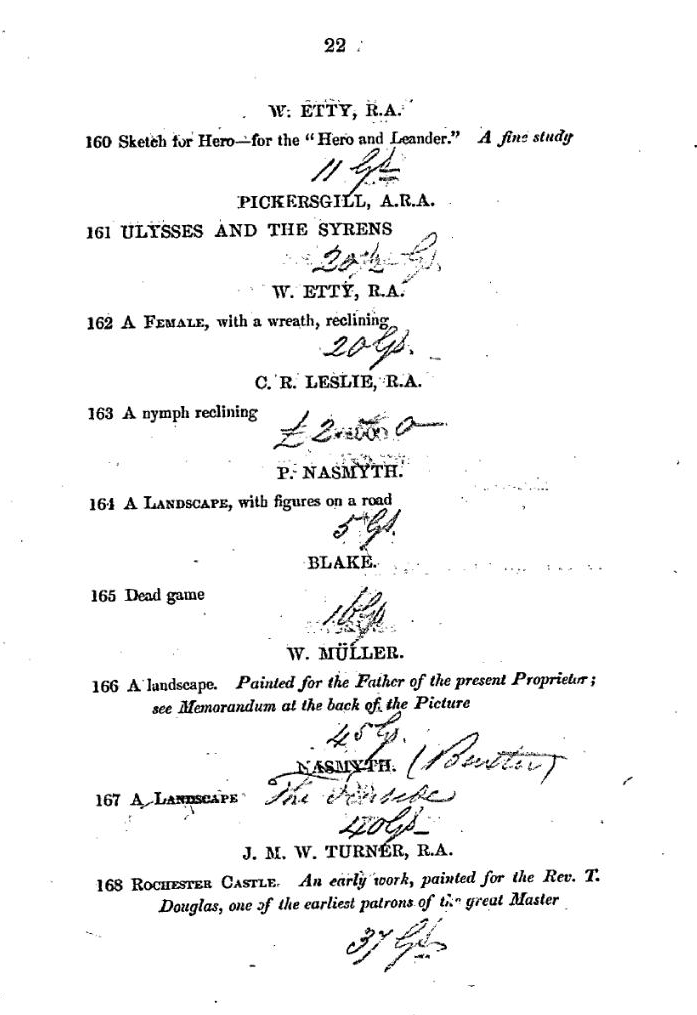
The documents presented here clearly show a picture of Rochester Castle completed at the home of the Rev. James Douglas and given by Turner to James or his daughter. The picture described here is recorded in the Nephew's Letter, in 1857, then subsequently in the auctions of 1860 and 1872. These three documents do not describe a stormy river scene with fishing boats. Nor do they describe a picture started at Rochester and completed at Foots Cray. However, they do place the picture in the possession of Dr. Hering before Turner's death. |
|
|
# |
.
| Rochester, the first oil painting. Christie's auctions of 12th to 14th March 1860 and 29th June 1872 | |
|
|
|
| In both of these auctions the picture is grouped
with oil paintings and the description is 'Rochester Castle' without
mention of fishermen, boats or a gale.
# |
|
JMW Turner's First Oil - 'Rochester Castle and the Adjacent Ground' | 1 |
|
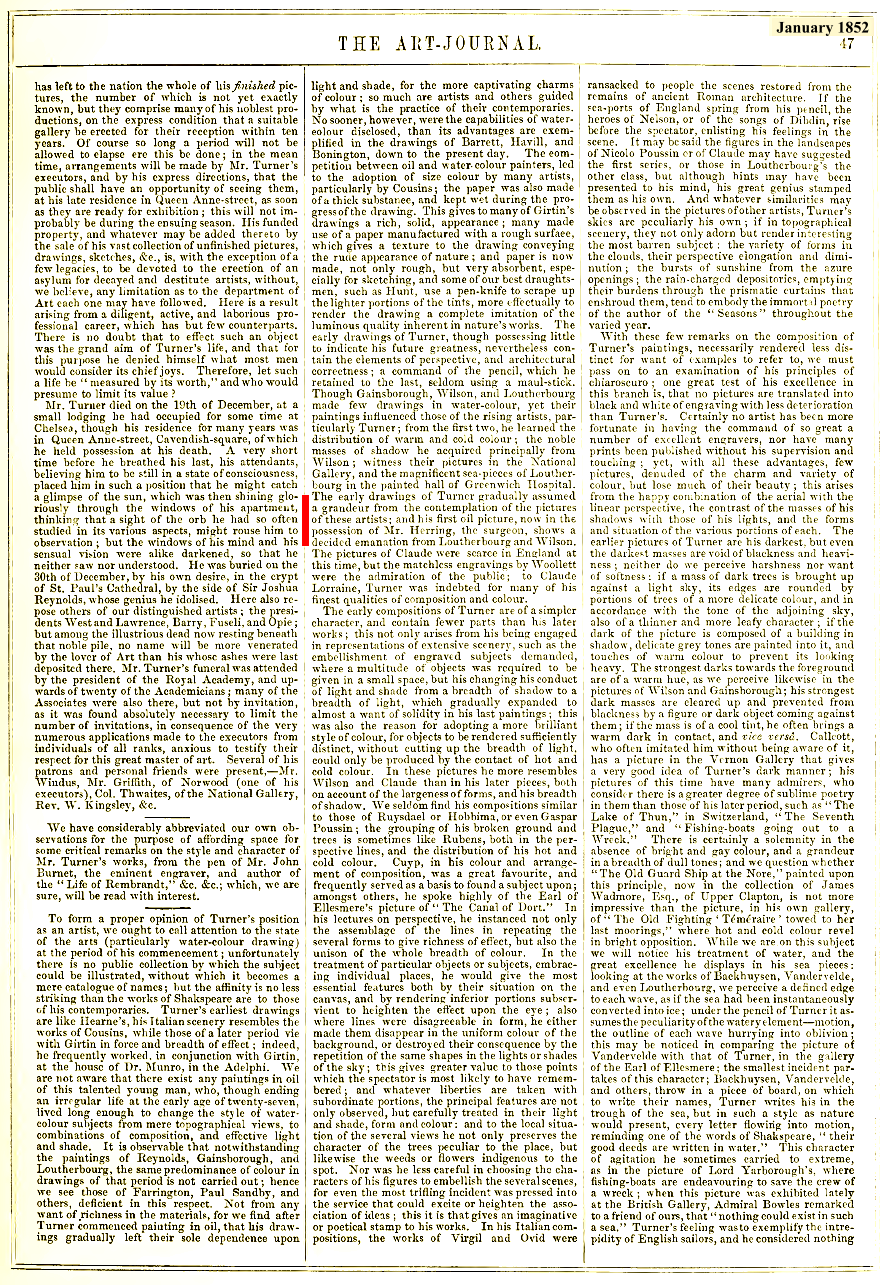
Two Literary Examples about Turner's First Oil John Burnet There is an earlier record of this picture in The Art Journal of January 1852. This section was written by John Burnet whose book 'Turner and his Works' was published later that year.
This tells us that the 'Douglas' picture was in the possession of Dr. Hering in 1852. The Post Office Directory for 1852 shows his address; 'William Hering, surgeon, 38 Mortimer St. Cavendish Sq'. This same address is shown in Boyles 1857 page 517: 'Wm Hering, 38 Mortimer St. Cavendish Sq.'. The manner in which the writer describes it does not seem to reflect the information given in the (later) Nephew's Letter - 'Rochester Castle and the adjacent ground':
'An emanation from Wilson' would be fair in the context of a classical landscape. However, the inclusion of 'Loutherbourg' suggests a sea-piece which is contrary to the description in the Nephew's Letter. Thomas Miller and Joseph Hogarth In 1854 Joseph Hogarth (who later, c.1862, acquired 'The rising squall, hot wells, from St. Vincent's rock, Bristol') published 'Turner and Girtin's Picturesque Views, Sixty Years Since' edited by Thomas Miller. Miller introduces the first oil in his introduction, 'Memoirs of Turner and Girtin': which seems very straightforward; like the Nephew's Letter there is no mention of a stormy river scene with fishing boats. However, Miller's text contains an additional layer of complexity which is examined in section 2. |
|
|
# |
.
|
|
|
|
# |
@@@@@
| 'Turner and Girtin's Picturesque Views, Sixty Years Since', edited by Thomas Miller, published by Joseph Hogarth, 1854. | |
|
|
| Foots Cray, the second oil painting.
# |
|
Minor Heading | X |
|
20 940 20 |
|
|
x |
.
|
JMW Turner's First Oil - 'Rochester Castle and the Adjacent Ground' | 1 |
|
||
|
# |
.
|
2. JMW Turner's Second Oil(not exhibited)
|
|
|
Two Kent Tours Recorded by Thomas Miller
Welsh and Kent Tours - Dates
Foots Cray September 1792
The Death of Rev. Robert Nixon
|
|
|
# |
@@@@@
| Hobart Town Colonial Times, 11th January 1845, see No. 39 | |
|
|
| # |
@@@@@
|
JMW Turner's Second Oil (not exhibited)
The Provenance of Turner's second oil on canvas Rev. Dr. Francis Russell Nixon, Joseph Hogarth |
|
|
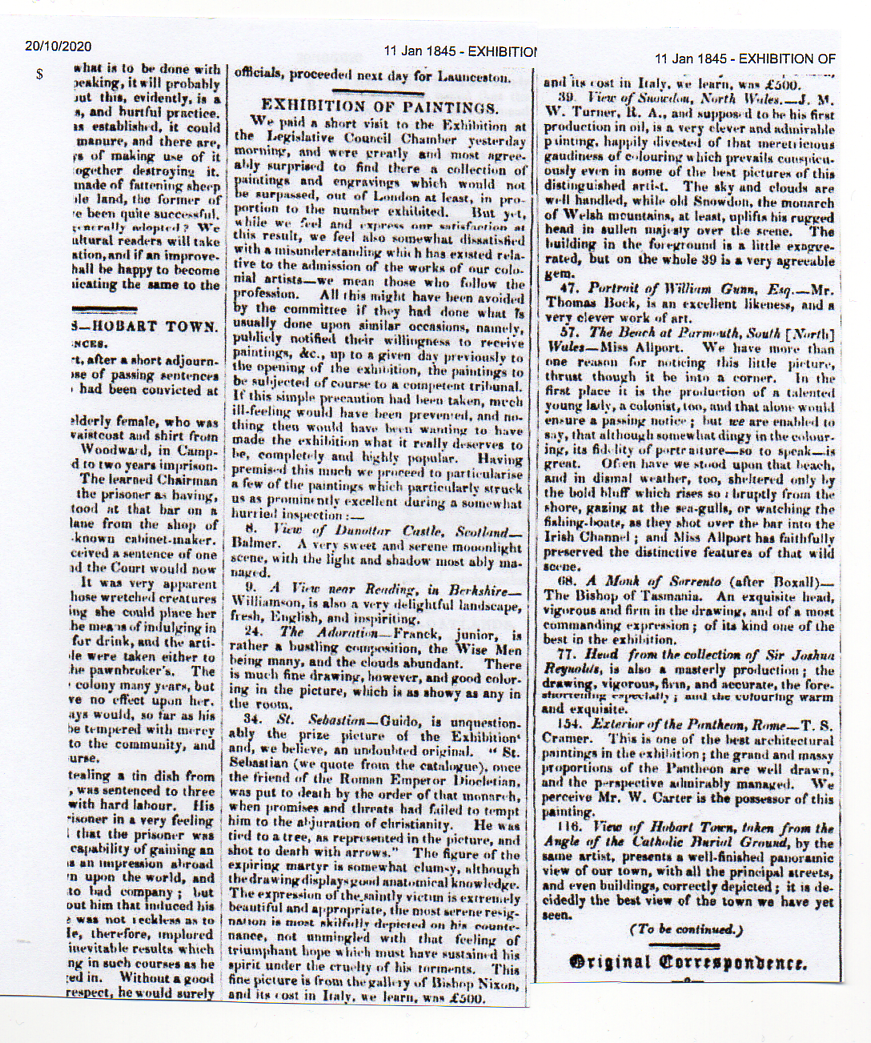
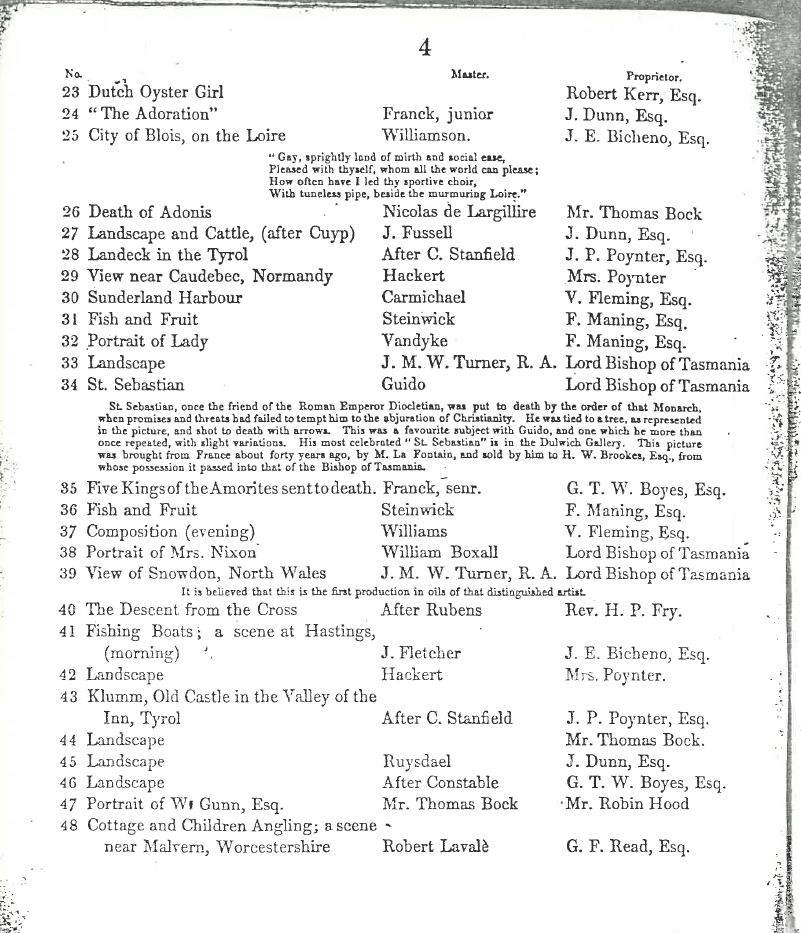
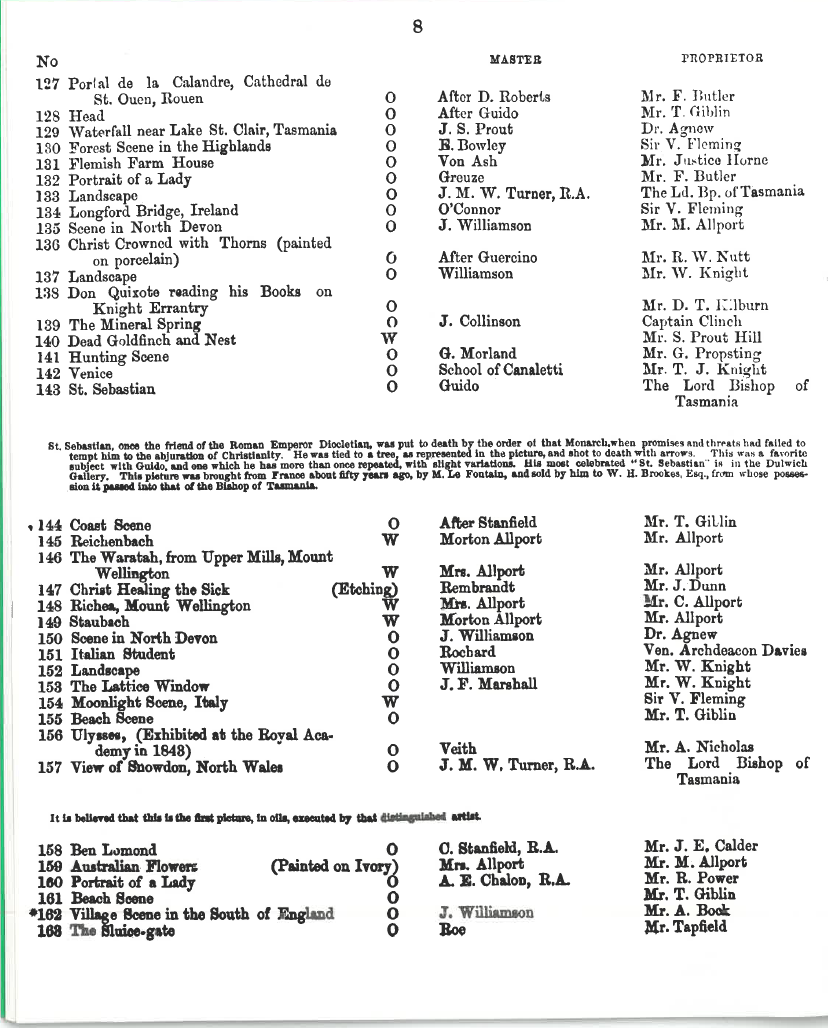
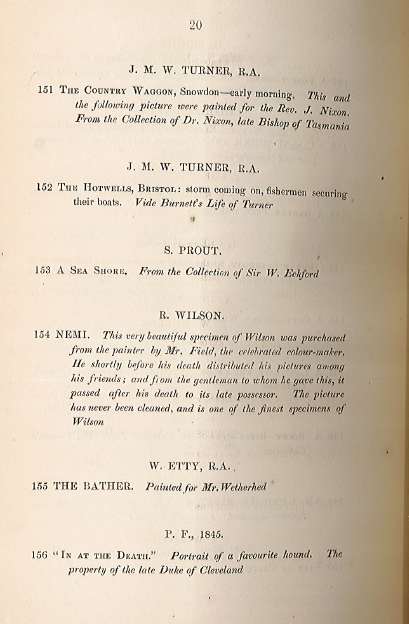
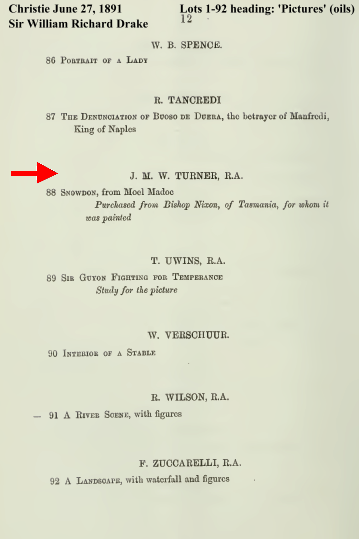
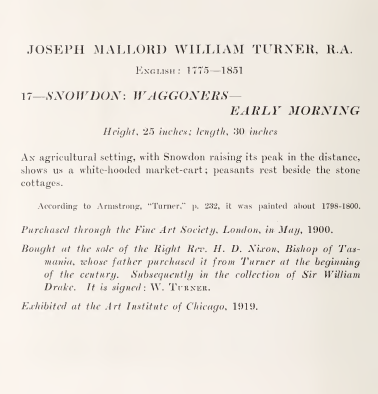
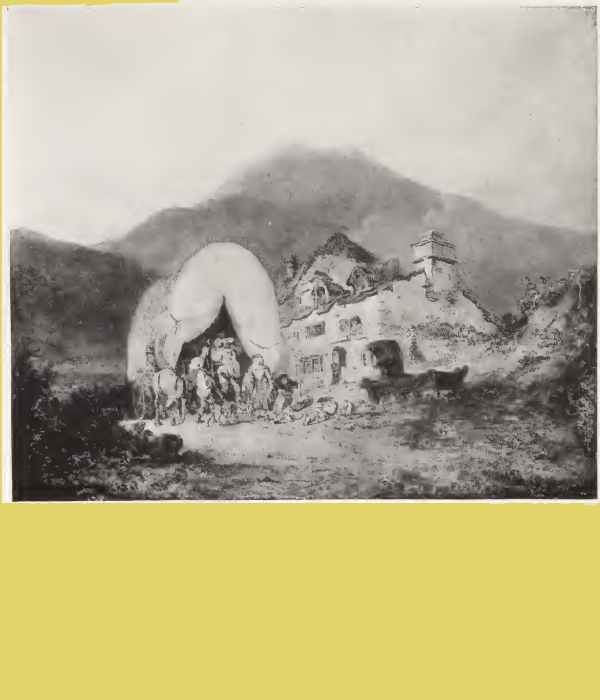
Hobart Town Exhibitions and the Return of 'The Country Waggon' to London. The picture descended to Rev. Robert Nixon's second son, Rev. Dr. Francis Russell Nixon who was appointed Bishop of Tasmania in 1842. The Bishop took his collection to Hobart Town, Tasmania and exhibited 'The Country Waggon' in 1845 and again in 1858. He served in Tasmania until 1862 and on 20th February he sailed aboard the 'Percy'; arriving in England on 22nd May 1862. The picture appeared at auction on 9th July 1864, lot 151, where the seller was recorded as 'Hogarth'. Joseph Hogarth was a picture dealer, publisher, engraver and picture restorer at that time working from 5, Haymarket, London. He was the publisher of 'Turner and Girtin's Picturesque Views, Sixty Years Since' (1854). The picture did not sell on that occasion. Lot 152 in the same sale was 'The Hotwells, Bristol' originally exhibited in 1793 as 'The rising squall, hot wells, from St. Vincent's rock, Bristol'. However, Hogarth evidently did sell 'The Country Waggon' because it was in the possession of Sir William Richard Drake when he died and was lot 88 at his executor's sale of 27th June 1891. 'The Country Waggon' in Chicago USA Passing briefly into the possession of the Fine Art Society of London, 'The Country Waggon' spent the next twenty years or so in the collection of Robert Hall McCormick (1847-1917). His collection was sold on April 15th 1920, No. 17 in the catalogue. |
|
|
# |
@@@@@
| Hobart Town 1845 Catalogue, page 4, No. 39 | |
|
|
| # |
@@@@@
| Hobart Town 1858 Exhibition Catalogue, see No. 157 | |
|
|
| # |
@@@@@
| Christie's 9th July 1864, lot 151 | |
|
|
| # |
@@@@@
| Christie's 27th June 1891, Sir William Richard Drake | |
|
|
| # |
@@@@@
| American Art Asociation, April 15th 1920, R Hall McCormick | |
|
|
| # |
.
|
3. JMW Turner's 'Third' Oil - 'Self Portrait Age 16' |
3 |
|
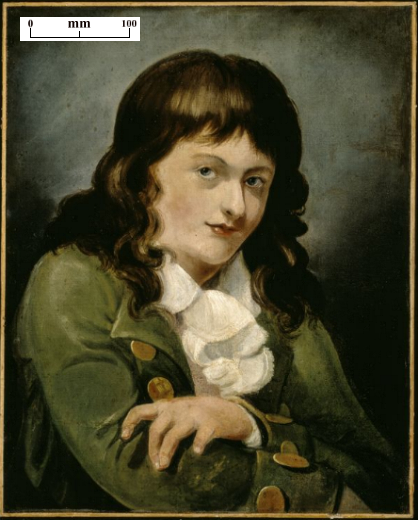
Introduction and Date of Painting The 'Self Portrait Age 16' shows Turner when 16 or 17 years old and is frequently compared with his earlier small self portrait made in September 1791 (NPG-MW06422). In 'Self Portrait Age 16' Turner appears somewhat older and probably closer to 17 than 16. His fourth and first exhibited oil, 'The rising squall, hot wells, from St. Vincent's rock, Bristol' must have been painted before the 1793 Royal Academy Exhibition when it was exhibited (29th April to 8th June 1793). In sections 1 and 2 above it was shown that Turner painted the first two oils in September 1792 in Rochester and Foots Cray, Kent. These timings tentatively places the painting of 'Self Portrait Age 16' and 'The rising squall, hot wells, from St. Vincent's rock, Bristol', both oils, in late September or early October 1792, after Turner's return to London, with paints and canvas purchased in Rochester and possibly on stretchers or strainers provided by the Rev. James Douglas (or Rev. Robert Nixon; or both). Henry Scott Trimmer (c.1778-1859) is said to have commented that the quality of this portrait was too good to have been painted by Turner (https://london-overlooked.com/williamturner/). However, I have found no direct evidence of this comment. If HST knew Turner from an early age ['Standing in the Sun' by Anthony Bailey; but probably based on Thornbury] then he would have known whether or not the painting was by Turner. Henry Scott Trimmer's comment is repeated in Butlin and Joll but the source appears to be Thornbury. It is probable that Turner produced his self portrait by observing himself in a mirror. If so, the image is horizontally inverted, that is: his right shoulder and arm is drawn on the right hand side of the canvas as it appears to the observer whereas the right arm of a sitter painted painted by an observing artist will appear on the left of the canvas. On Turner's portrait therefore the right hand which is prominent is the hand that turner would not have seen because he was using it to draw. This feature is therefore drawn indirectly and not from immediate observation which may explain the slightly awkward positioning of the fingers. Butlin and Joll failed to account for the inversion and in quoting Ruskin's phrase about Turner's 'broad and clumsy manner' describe it as "[e.g., the left hand]". |
|
|
# | |
.
|
Turner's 'Third' Oil - 'Self Portrait Age 16' |
3 |
|
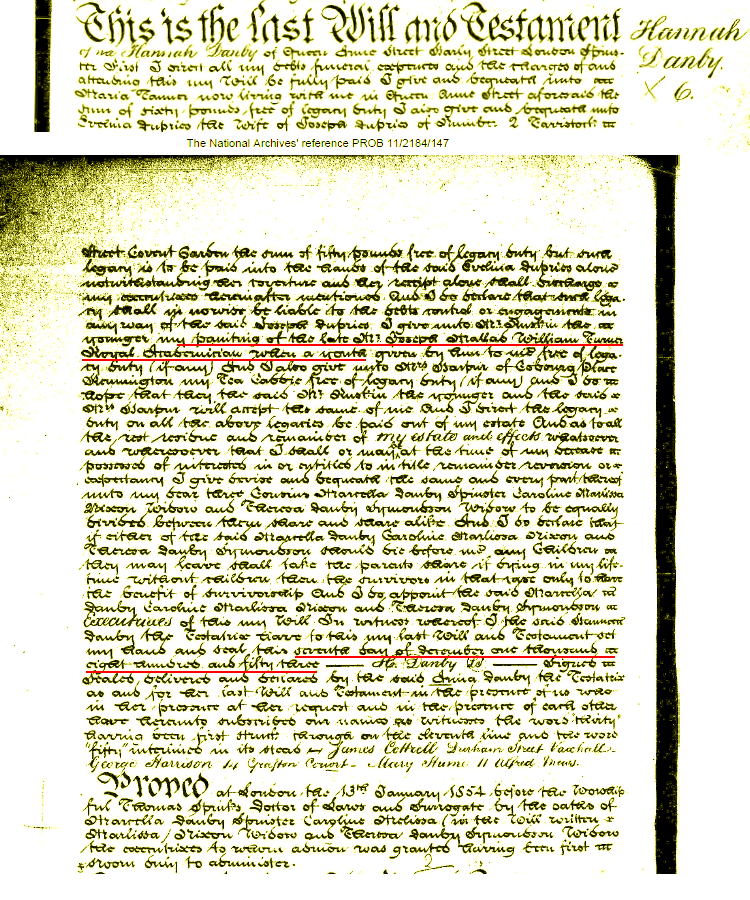
1853 Hannah Danby The earliest written documentation of 'Self Portrait Age 16' is found in Hannah Danby's will dated 7th December 1853 where she refers to it as:
The probate (13th January 1854) does not specify her date of death; burial is recorded as 15th December 1853, age 67. The will gives her address as "Queen Anne Street". The phrase 'given by him to me free of legacy duty (if any)' refers to Hannah Danby's bequest to Ruskin (not Turner's bequest to her). Turner's will has been examined in detail and the self portrait does not feature at all; so Hannah Danby took possession 'Self Portrait Age 16' during Turner's lifetime. (The will examined is that printed in Thornbury's 'Life of Turner' 1862 Volume 2 at the appendix starting on page 407. Thornbury's 'condensed version' appears on page 287.) There is no indication of the timing of Turner's gift of the painting to Hannah Danby. There are many unsubstantiated stories in the literature and on the internet. The gift by Turner to Hannah Danby seems to be otherwise undocumented. It may have been given in 1845/46 when Turner was preparing to leave the house at 67 Queen Anne Street. Since Danby remained in that house there must have been some evidence to prove that the portrait was her property. Assuming that Turner had been unconcerned about this portrait at the time he gave it to Danby and that he may have considered the gift to be of little consequence the question arises as to the condition of the painting when he gave it to her. |
|
|
# | |
.
|
Turner's 'Third' Oil - 'Self Portrait Age 16' Transcripts from the National Archive showing Hannah Danby's Will and Probate.This shows her bequest of 'Self Portrait Age 16' to John Ruskin. The will is dated 7th December 1853 and gives no indication of the date on which Turner gave the painting to her. |
3 |
|
|
|
|
# | |
.
|
Turner's 'Third' Oil - 'Self Portrait Age 16' |
3 |
|
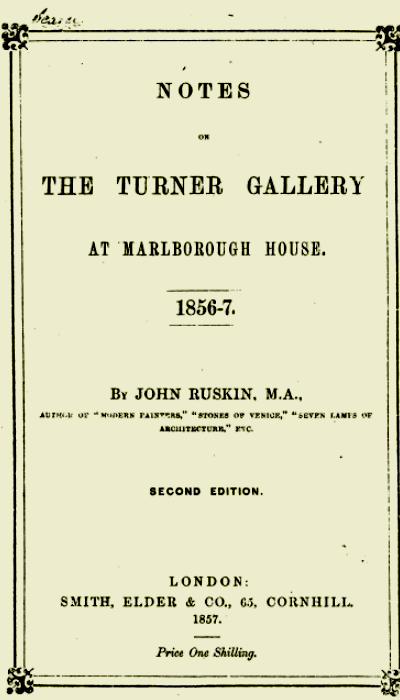
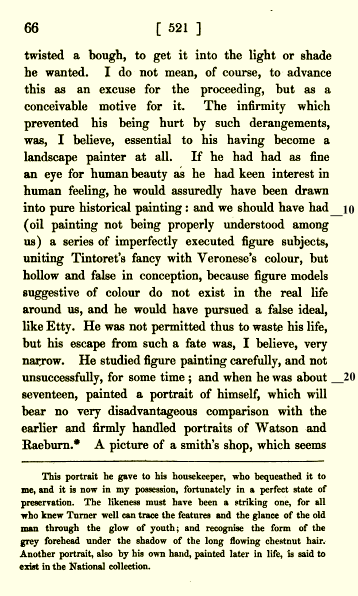
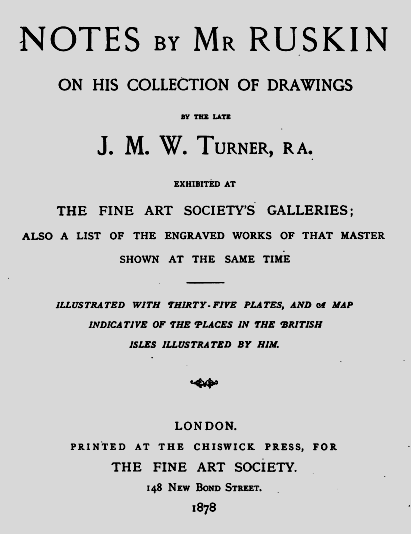
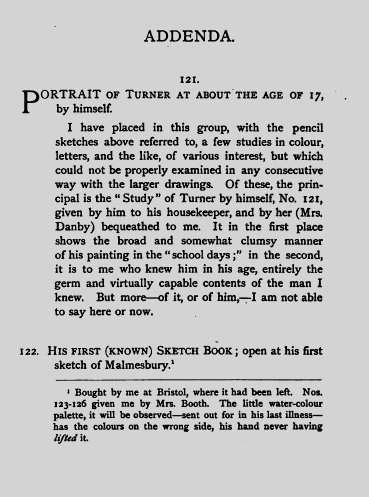
John Ruskin Danby bequeathed the picture to John Ruskin who recorded it in his 'Notes on the Turner Gallery at Marlborough House. 1856', published by Smith, Elder & Co., London 1857. There are several editions. Illustrated here are the title pages of the first and second editions and page 66 of the second edition in which Ruskin describes the picture in his possession as being in 'a perfect state of preservation':
The final sentance of this footnote was revised in the fifth (final) edition published later in 1857:
It appears therefore that at the time he wrote the second edition Ruskin had not seen the later portrait. However, between the second and the fifth editions he saw the later portrait and decided that it was 'less striking in resemblance'. John Ruskin took possession of the picture in 1854. It is unclear as to whether it was framed and what stretcher it was on at that time. It was about this time (1854) that he had the Latin inscription put on the frame which was hung in his home, Brantwood. sources-ruskin-danby-frame_blog |
|
|
# | |
.
|
Turner's 'Third' Oil - 'Self Portrait Age 16' definitive page |
3 |
|
||
|
X | |
.
| Title pages from John Ruskin's 'Notes on the Turner Gallery at Marlborough House' first and second editions. Both were published in 1857 when Ruskin was age 38. | |
|
|
.
| Page 66 from John Ruskin's 'Notes on the Turner
Gallery at Marlborough House' second edition. Published in 1857.
The number 521 printed at the top of the page refers to the picture numbered 521 in the Marlbborough Gallery, 'PHRYNE GOING TO THE BATH ( 1838 )' The footnote shows that Ruskin's housekeeper, Hannah Danby, bequeathed the picture which by 1857 was 'in a perfect state of.preservation'. He does not say that he received it in this condition. |
|
|
|
.
|
Turner's 'Third' Oil - 'Self Portrait Age 16'
Exhibited 1878 |
|
|
Fine Art Society Exhibition, 1878 'Self Portrait Age 16' was exhibited (No. 121) at this exhibition.
|
|
|
X |
.
| Page 68 from Ruskin's notes of the 1878 Fine Art Society Exhibition. | |
|
|
.
|
Turner's 'Third' Oil - 'Self Portrait Age 16'
1890 Photographs |
|
|
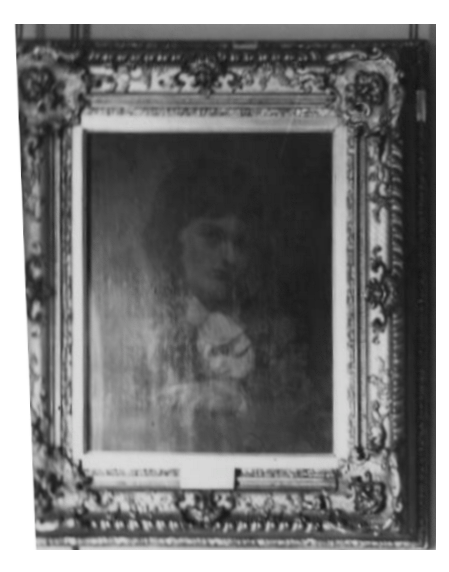
There are two photographs of 'Self Portrait Age 16' in the National Portrait Galler,. NPG-x12195 and NPG-x12196. Both are photographs, by John McClelland, of several paintings hanging at Brantwood. Extracts here, from published NPG digital images, have been processed to show 'Self Portrait Age 16' alone and one has lost some of the frame image which did not appear on the NPG digital image. These photographs show the frame in which the picture was hanging in Brantwood.
In NPG-x12195 the picture appears to be glazed; there are reflections of windows. |
|
|
45x850, 45x40 |
.
|
JMW Turner's 'Third' Oil - 'Self Portrait Age 16'
1890 Photographs, Frame & Stretcher |
|
|
In NPG-x12196 there are no clear reflections. Frame From 'The Frame Blog' March 6th, 2013:
|
|
|
45x850, 45x40 |
.
|
JMW Turner's 'Third' Oil - 'Self Portrait Age 16'
|
3 |
|
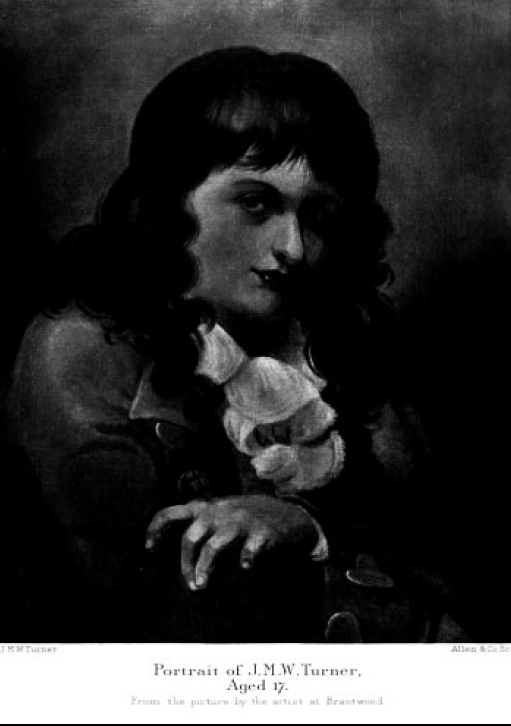
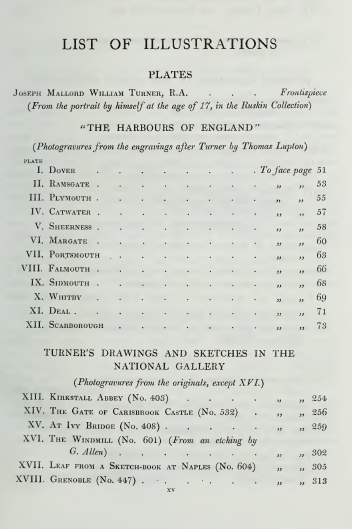
Illustrated as the frontispiece where it is described as 'Portrait of JMW Turner Age 17'
|
|
|
.
|
JMW Turner's 'Third' Oil - 'Self Portrait Age 16'
|
3 |
|
The self portrait shows Turner at the age of 17. |
|
|
x |
.
|
JMW Turner's 'Third' Oil - 'Self Portrait Age 16'
|
3 |
|
Frame From 'The Frame Blog' March 6th, 2013:
It is confirmed that the current frame is not the same as the Brantwood frame. The artist's name plate, however, is identical (within the constraints of examining photographs) and therefore transferred from the Brantwood frame. Examination of photographs of the 'modern' frame shows several holes for hanging positions and old tape which may be remnants from previous pictures hung in the frame. Above the current (Ruskin) name plate there is a slightly damaged region which may indicate that an earlier name plate has been removed. The point about the seeking of a latin inscription for the frame might also indicate that Ruskin was also having a new frame made at that time. In the same issue of the Frame Blog an original Turner frame from 1800 is proposed together with a discussion of the main types of frame preferred by Turner. The Brantwood frame is significantly different and therefore unlikely to have originated with Turner. |
|
|
.
|
JMW Turner's 'Third' Oil - 'Self Portrait Age 16' |
X |
|
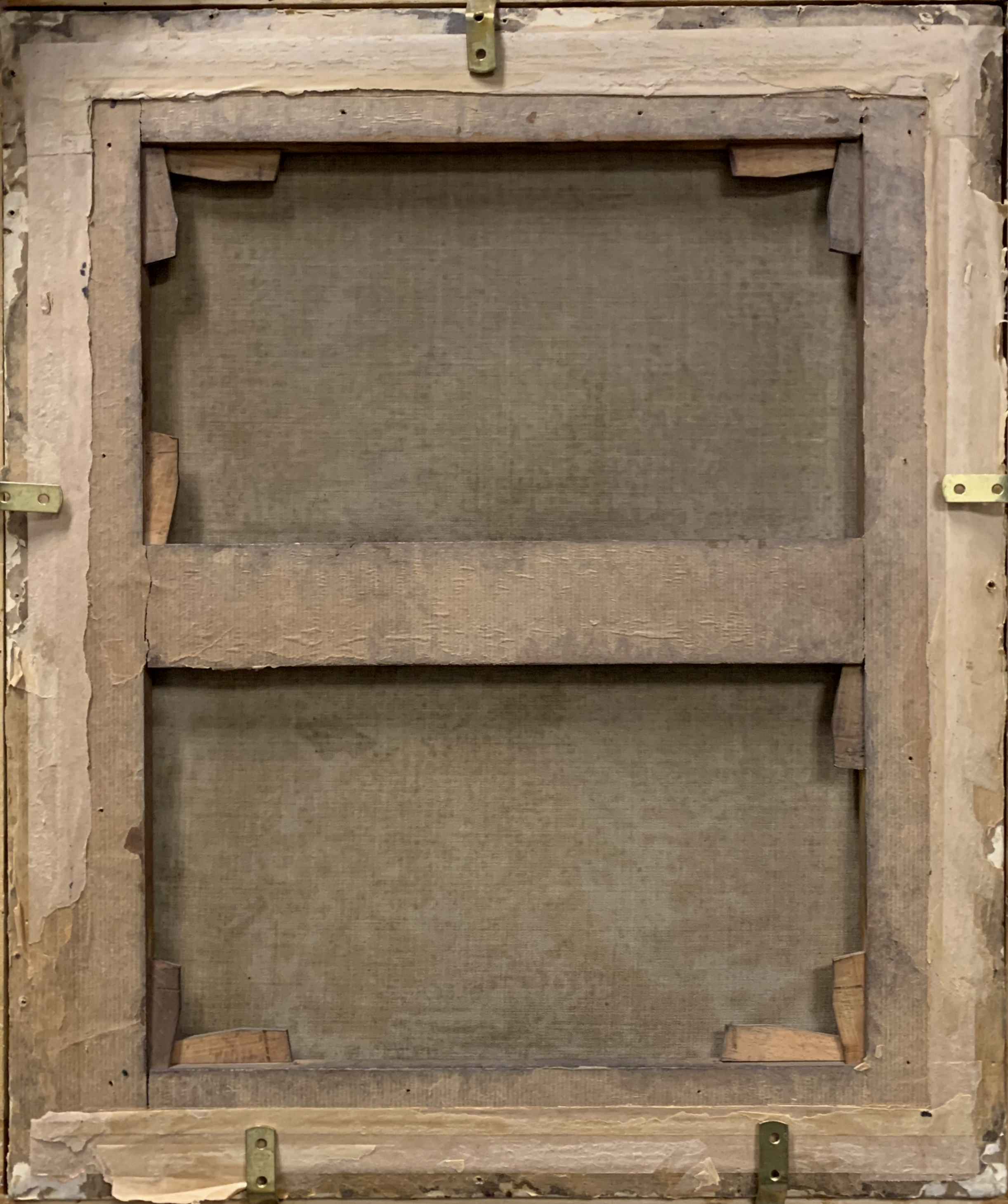
Stretcher 'Self Portrait Age 16' is now in the possession of the Indianapolis Museum of Art. It is mounted on a stretcher 20½" x 16½". The stretcher that it is now mounted on is fitted with a horizontal cross bar and two keys per joint (although some are missing). No makers marks are visible on the photograph examined. This exercise was carried out with the objective of finding context for 'The Rising Squall' so the issue here is not so much the nature, timing and manufacture of the stretcher now supporting the portrait but to establish whether or not it is Turner's original stretcher upon which the portrait was painted.
Three online resources were consulted in respect of the stretcher:
These sources indicate that this stretcher design, particularly the 'two key' stretching mechanism, emerged in the mid 19th century. This self portrait was painted in 1792 and this stretcher cannot therefore be Turner's original. |
|
|
x |
.
|
JMW Turner's 'Third' Oil - 'Self Portrait Age 16' |
3 |
|
Modern References There is a lot of information on the internet but some is misinformed. Butlin and Joll reliably trace the provenance but give little attention to the materials used or its relationship to the other oils painted at the same time. Their summary is as follows: "The authenticity of ['Self Portrait age 16'] continues to be questioned...on the grounds of quality. ... Martin Butler is only very reluctantly persuaded by the provenance and by these similarities [NPG MW06422], that the work must be genuine." The entry in Butlin and Joll fails to recognise that a self portrait is a mirror image and that the visible hand is the right hand. |
|
|
x |
.
|
|
3 |
|
|
|
|
.
|
4. 'The rising squall, hot wells, from St. Vincent's rock, Bristol'. | |
|
Text This is covered in a separate book. For this book where I have been broader with interpretation of the evidence the Rising Squall is represented by 'Squall at St. Vincents Rock, Bristol' |
|
|
45x850, 45x40 |
@@@@@
|
4. 'The rising squall, hot wells, from St. Vincent's rock, Bristol'. |
X |
|
The factual history of this painting, exhibited in 1793, is set out in detail in part 1 of 'The Mystery of The Rising Squall'. The main points arising are:
|
|
|
x |
.
 <1
<1
 <2
<2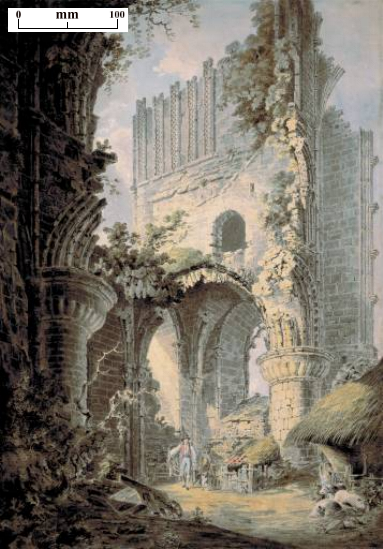 <3
<3
 <4
<4
 <5
<5 <6
Crickhowell
<6
Crickhowell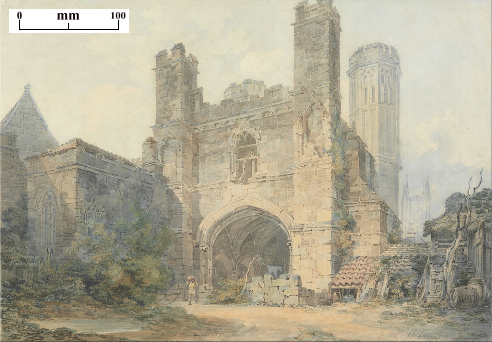 <7
<7
 <8
<8
 <9
<9
 <10
<10
 <11
<11 <13
<13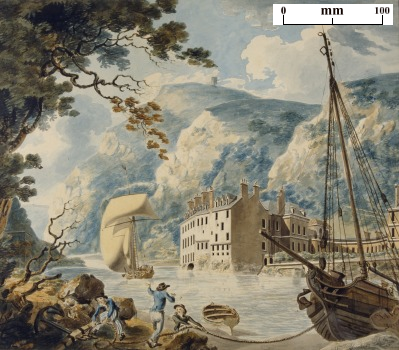 <14
<14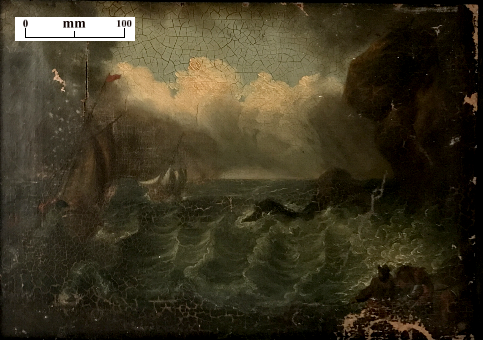 <15
<15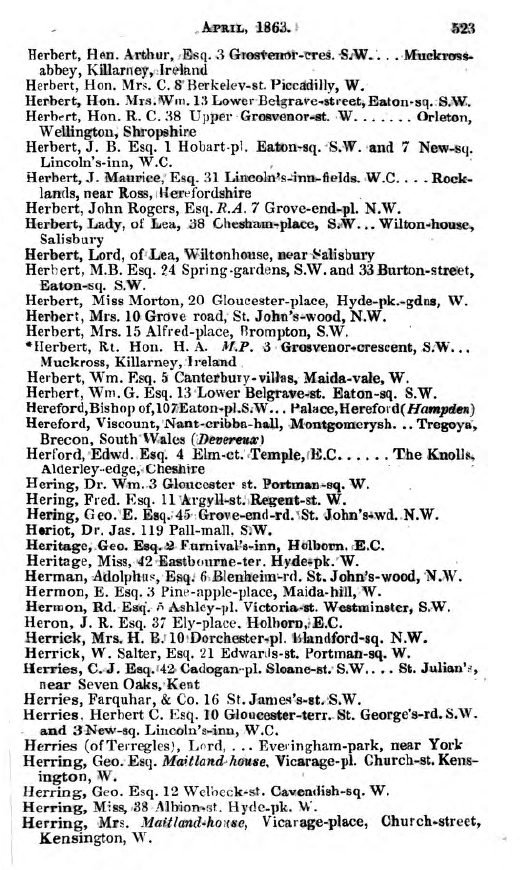
 Published by Phillimore & Co. Ltd., 1975
 James
Oldershaw Will (detail)
James
Oldershaw Will (detail) James
Oldershaw Probate (detail)
James
Oldershaw Probate (detail)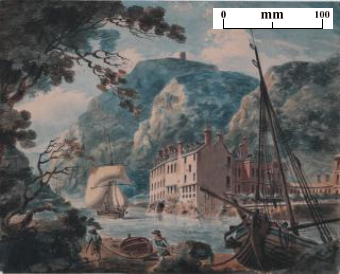
 ...
...
 >>>
>>> >>>
>>>
 ...
...
 ...
...

 ...
...
 ...
...
 ...
... ...
...
 ...
...
 ...
...
 ...
...